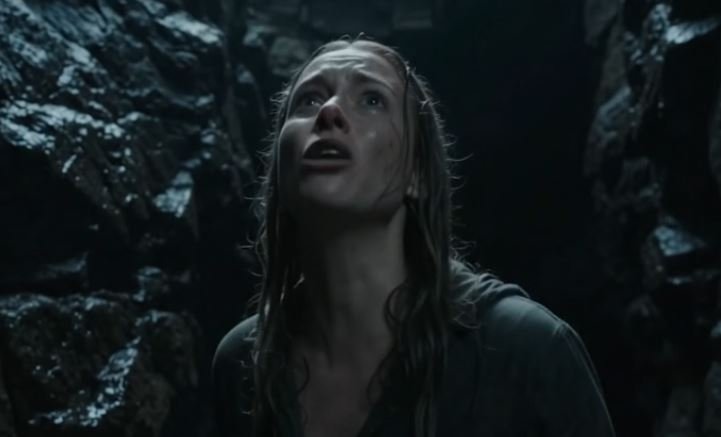
The evening tide along the rugged Northern Coast came in two hours earlier than predicted due to an off-shore storm system. Elena, a marine biologist conducting coastal cliff surveys, was exploring a deep sea cave at the base of the granite bluffs when a rogue wave slammed into the cave mouth. The force of the water washed heavy driftwood logs into the narrow entrance, jamming the main exit and trapping Elena in a subterranean stone chamber as the freezing ocean tide began to fill the vault.
The cold ocean water reached Elena’s waist within twenty minutes. Plunged into near darkness with her headlamp submerged, she managed to climb onto a narrow granite ledge four feet above the water line. However, a sharp rock fall during the surge had fractured her ankle, leaving her unable to scale the wet, vertical blowhole shaft that led to the cliff top. The thick granite walls and roaring surf completely swallowed her shouts for help.
Pacing along the cliff edge eighty feet above was Atlas—a four-year-old Landseer Newfoundland with a thick waterproof double coat and innate coastal tracking instincts. Atlas belonged to the local lighthouse keeper and often accompanied researchers along the shore.
Sensing the sudden shift in the ocean surge and catching Elena’s scent rising through the narrow cliff top blowhole, Atlas didn’t wander off.
Knowing the main beach path was completely submerged by the tide, Atlas lowered his head over the two-foot-wide vertical blowhole opening in the granite grass. Instead of barking aimlessly at the ocean, Atlas pressed his broad muzzle directly into the rock opening and began emitting continuous, deep-pitched, low-frequency howls down the natural stone shaft.
The natural acoustic shape of the blowhole acted like a massive foghorn. His deep howls echoed off the subterranean cavern walls below, giving Elena hope, while simultaneously projecting powerful sound waves across the windy cliff top where the coastal guard team was conducting their evening patrol.
Hearing the rhythmic, horn-like howling echoing from the ground, the rescue patrol rushed to the blowhole shaft and dropped a directional microphone and high-power winch line down the opening.
Guided by Atlas’s precise location above the blowhole, rescuers breached the driftwood jam at the cave mouth with a motorized watercraft just as the tide reached the granite ledge.
When they brought Elena out onto the dry beach, she wrapped her arms around Atlas’s wet neck while paramedics stabilized her leg.
The coast guard captain looked up at the towering granite bluffs and said in total awe: “The cave entrance was completely underwater… if this dog hadn’t turned that vertical blowhole into a natural foghorn, we would have searched five miles down the coast.”