They emerged at 12:34 AM.
Marisol pushed the hatch open. It resisted — debris, weight, the particular physics of destruction. She shoved with her shoulders, with her legs, with the particular strength that adrenaline provides.
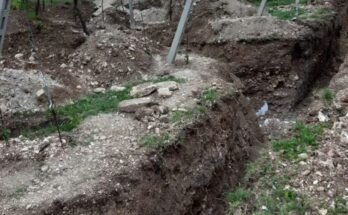
The shelter was gone.
Not damaged. Gone. The particular absence of a building that had stood for 40 years and now existed only as foundation and scattered lumber. The kennels — the ones she hadn’t opened — were twisted metal. The ones she had opened were empty, the dogs scattered, running through debris, alive.
Duke climbed out behind her.
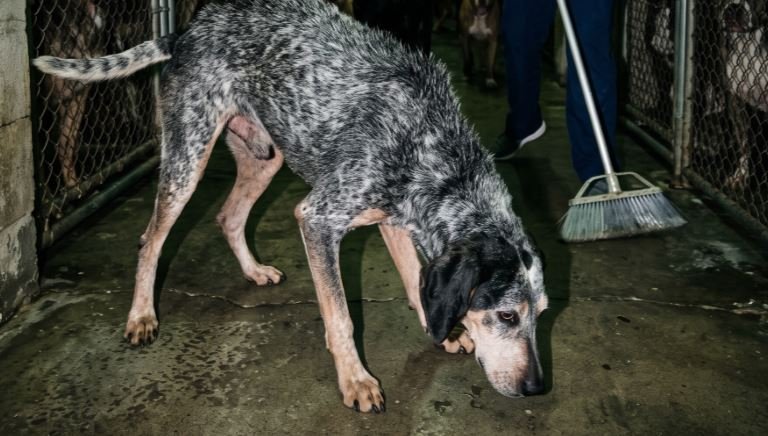
He didn’t run. He stood beside her, nose to the wind, assessing the particular landscape of a world that had changed in 90 seconds. His ears rotated. His tail — for the first time in 180 days — wagged.
Once.
Marisol sat in the rubble.
Not because she was tired. Because she was alive. Because 23 dogs were alive. Because the particular dog that the system had scheduled to kill in 6 hours had saved them all.
She called 911.
Not for rescue — she didn’t need it. For reporting. For the particular bureaucracy of disaster that requires documentation, that requires someone to say this happened, we are here, we survived.
The dispatcher didn’t believe her at first.
“A tornado? Ma’am, we have no warning. No sirens. The system didn’t—”
“I know,” Marisol said. “The system failed. The dog didn’t.”
EMS arrived. Fire department. The particular machinery of response that activates when the danger is past. They found her sitting in rubble with a Bluetick Coonhound mix leaning against her, 23 dogs wandering through debris, and a shelter that had been erased from the earth.
The news came with dawn.
Not national. Local at first — Tornado Destroys Shelter, Night Worker and Dogs Survive. Then someone posted a video — Marisol’s own phone footage from the bunker, dark, shaky, the sound of the tornado overhead and Duke’s breathing steady against her chest.
The video hit 50 million views in 24 hours.
The algorithm — that mysterious, merciless god — had found its offering. A scheduled euthanasia. A failed warning system. A dog who heard what technology missed. The particular story that the internet loves — the underdog, literally, who becomes the hero in the final hours of his life.
Duke became famous.
Not because he wanted to. Because he was. Because the particular image of him — scarred, old, unadoptable — standing in rubble beside a woman who owed him her life was the particular image that broke hearts and opened wallets.
The shelter was rebuilt.
Not by the county. By donations. Millions. The particular flood of money that follows viral dogs — people who saw Duke and decided that Mercer County deserved better, that the dogs deserved better, that the system that had failed and the dog that had succeeded deserved a monument.
They named it after him.
The Duke Center for Animal Rescue. No-kill. Tornado-proof. With a bunker big enough for 100 dogs and the particular plaque by the door that read: “He heard what we couldn’t. He saved who we wouldn’t.”
Duke lived three more years.
Not as a shelter dog. As Marisol’s dog. As the particular companion of a woman who had learned that survival is not about systems or technology or the particular machinery of warning that humans build and trust.
It is about listening.
To the air. To the pressure. To the particular frequencies that dogs hear and humans ignore. To the old hound in Kennel 12 who sat with his nose to the gap beneath the door and heard the freight train coming.
Marisol still works nights.
Not at a shelter. At the Duke Center. Where she walks the halls at 2 AM and listens to the dogs — the barking, the whining, the particular silence of creatures who are safe, who are valued, who will not be scheduled for death because they are old, or scarred, or difficult.
And sometimes — when the pressure drops, when the crickets stop, when the particular feeling of a tornado night settles over Oklahoma — she opens the kennels.
All of them.
She leads the dogs to the bunker. Not because the sirens have failed — though she knows they can. But because Duke taught her that the best warning system is not technology.
It is trust.
It is listening to the creature that the world has rejected, that the system has failed, that is scheduled for euthanasia in the morning but who, in the dark hours before dawn, hears what no one else can hear and refuses to be silent.
Duke is buried beneath the oak tree at the Duke Center.
Not alone. Marisol visits every day. She sits with him. She listens to the wind. And she remembers — always remembers — that the freight train sound is not always audible, not always warned, not always survivable.
Unless you have a dog who hears it.
Unless you have the courage to open the door when he asks.
Unless you understand that the creatures we schedule to die are sometimes the only ones who can teach us how to live.