I was 32 years old, working retail, and living in a cramped studio apartment. To my family, I was the black sheep—the disappointment. My sister Claire was a corporate lawyer. My father Richard was a retired surgeon. My mother Helen was the perfect society hostess. And I was the failure who “wasted” his potential.
Every family dinner was the same. My father would pour himself a glass of expensive wine, look at me with disdain, and ask: “Still working at that mall, Ethan? Still throwing away that Johns Hopkins education?”
I would nod, take the abuse, and change the subject. I had to. Because I was carrying a secret so heavy it had crushed my spine.
Tonight was different. Tonight, my father had pushed too far.
“You know what your problem is, Ethan?” he barked, slamming his fist on the polished mahogany table. “You’re a coward. You had everything handed to you, and you threw it away.”
I looked up from my plate. My voice was quiet. Steady. “You’re wrong, Dad.”
The room went cold. My sister stopped chewing. My mother froze mid-sip.
“Excuse me?” my father hissed.
“I said you’re wrong,” I repeated, standing up. “You don’t know why I left med school. You never asked. You just assumed.”
He stood up too, his face reddening. “How dare you speak to me—”
“I dropped out because YOU asked me to!” I shouted, my voice cracking. “Fifteen years ago, you came to my dorm room. You were crying. You told me you had an affair with a woman named Maria. You told me she had a son. MY half-brother. And when she died of cancer, you asked me to raise him. YOU asked ME to cover up your lie so Mom wouldn’t find out.”
My sister dropped her fork. It clattered against the china.
My father’s face went pale as a ghost.
“I was SEVENTEEN!” I screamed. “I gave up my scholarship. I gave up my future. I worked three jobs to raise a child you refused to acknowledge. And you paid me. You paid me $500 a month to stay silent. To be the failure so you could remain the hero!”
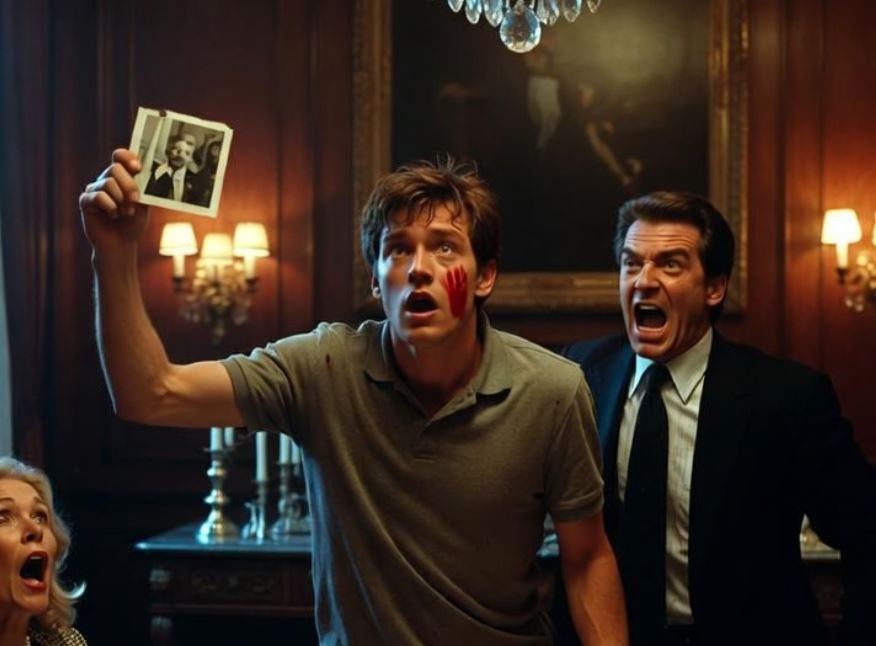
My father lunged across the table. His hand connected with my cheek—a vicious, open-palmed slap that echoed through the dining room.
I didn’t flinch. I had been slapped before. By life. By poverty. By loneliness.
I reached into my pocket and pulled out a worn, folded photograph. I slapped it onto the table. “This is Marcus,” I said, tears streaming down my face. “He’s ten years old. He has autism. He doesn’t speak much. But he knows how to read. He knows how to draw. He draws pictures of a family he’s never met. And every night, he asks me if you’re ever coming to meet him.”
My mother stood up. Her hands were trembling. She picked up the photograph with shaking fingers. She looked at the face of a young boy with messy dark hair and my father’s eyes.
She turned to my father. Her voice was ice. “Is this true, Richard?”
He opened his mouth. Nothing came out.
My mother looked back at the photograph. Then at me—at the dark circles under my eyes, the calloused hands, the cheap clothes.
She walked around the table, slowly, deliberately. She knelt in front of me. She took my hands—my rough, scarred hands—and pressed them to her lips.
“You raised a child alone?” she whispered. “You were just a boy yourself. You gave up everything. Everything. For us. For this family. For him.”
I broke. I collapsed into her arms, sobbing like I was five years old again. “I just wanted you to be proud of me,” I wept. “I just wanted you to love me.”
“I love you, my son,” she cried. “I love you more than anything in this world. You are not the failure. You are the hero. You always have been.”
My sister Claire was sobbing now. She stood up and looked at our father. “You did this? You ruined his life to protect your affair? You let us believe he was worthless?”
My father sank into his chair, his face buried in his hands. “I thought I was protecting everyone,” he muttered. “I thought I could fix it with money. I was so wrong. So wrong.”
Today, Marcus lives with me. But he visits my mother’s house every Sunday. She makes him pancakes. She taught him how to paint. And my father—he shows up every Sunday too. He doesn’t speak much. He just sits in the corner, watching Marcus draw.
Sometimes, Marcus looks up and hands him a drawing. Last week, it was a picture of a man crying.
My father keeps it in his wallet. Right next to the photograph he never had the courage to show anyone.