Looking back, the 1972 Academy Awards feel like a time capsule of a changing Hollywood.
The 44th annual ceremony, held on April 10, 1972, at the Dorothy Chandler Pavilion in Los Angeles, was more than just an awards show. It was a dazzling celebration of cinema that captured the essence of a time gone by. In recent years, the Oscars have often felt bland and predictable — more about showing off than genuinely celebrating achievement. The heartfelt joy and pride in others’ success seems to have faded.
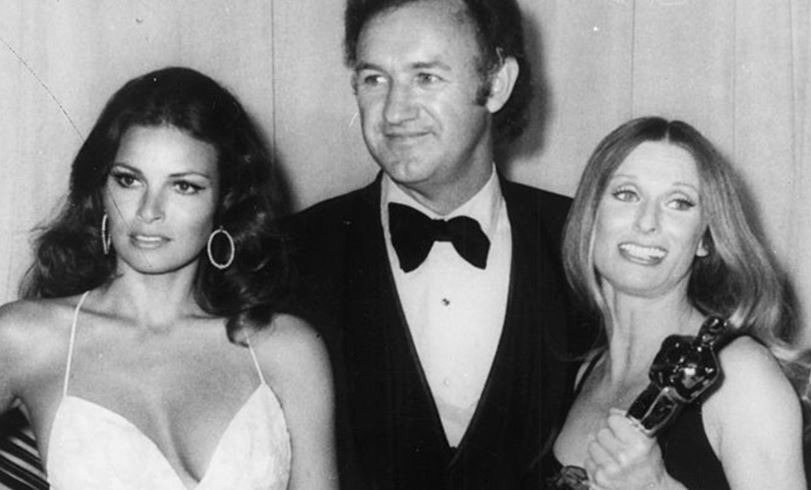
But 1972 was something entirely different. That night was filled with unforgettable moments that set the bar high for every Oscar ceremony to follow. The unedited photos from that evening tell a story of pure glamour and star power. So what really made it stand out?

A Historic Year for Film
To begin with, the 44th Academy Awards recognized some of the greatest films in cinema history. The French Connection dominated the night, taking home five Oscars including Best Picture, Best Director for William Friedkin, and Best Actor for Gene Hackman. The film’s gritty realism and intense car chases set a new standard for thrillers.
Gene Hackman was so shocked by his win that he couldn’t even remember getting up from his seat. On stage, he expressed gratitude to his first drama coach and his mother, but was soon overwhelmed with emotion. He later admitted: “I don’t remember getting from my seat to the podium”.

That same year, Stanley Kubrick’s A Clockwork Orange was nominated, sparking both controversy and admiration. Fiddler on the Roof charmed audiences with its sweeping score, while Peter Bogdanovich’s The Last Picture Show earned eight nominations, with Cloris Leachman and Ben Johnson taking home the supporting acting awards.
A Dazzling Return to Elegance

The 1972 Academy Awards marked a stunning return to the glitz and glamour of Hollywood’s golden era. Gone were the feathers, fringe, and hippie headbands that had dominated recent ceremonies. This year’s gala showcased a stunning array of vintage elegance, with stars adorned in flowing chiffons and luxurious brocades, accented by diamonds and furs. As some reporters noted, there wasn’t a hotpants outfit in sight.
Charlie Chaplin’s Historic Return

The undisputed highlight of the evening — and perhaps one of the most memorable moments in Oscar history — was the return of Charlie Chaplin.
After a self-imposed 20-year exile from the United States, the 83-year-old legend came back to Hollywood to accept an honorary Academy Award for his “incalculable effect he has had in making motion pictures the art form of this century”.

When he took the stage, the audience of 2,500 dignitaries erupted. Chaplin received a twelve-minute standing ovation — one of the longest in Oscar history. Ever the master of silent gesture, he held out his hands in disbelief and shook his head as the cheers kept growing.
The moment was made even more poignant by the fact that presenter Jack Lemmon handed him his honorary statuette — along with a little tramp hat and cane. It was, as one writer put it, “like the ending of the film Limelight itself. Life imitating art”.
Jane Fonda’s Bold Fashion Statement
While the night was a return to classic Hollywood glamour, not everyone played it safe. Jane Fonda, who won Best Actress for Klute, arrived in a black Yves Saint Laurent pantsuit that she had purchased off the rack years earlier.
At the time, Fonda was actively protesting the Vietnam War, and her choice to wear a four-year-old suit was seen as a deliberate sign of protest against the establishment — and a feminist statement about a woman’s right to dress on her own terms.
Betty Grable’s Final Farewell

The evening also featured one of the last public appearances of Hollywood legend Betty Grable. Battling cancer at the time, Grable appeared alongside one of her leading men from the 1940s, singer Dick Haymes, to present the musical scoring awards. She passed away the following year.
A Night of Historic Rivalries
The 1972 Oscars also featured one of the most famous rivalries in Academy history: The Godfather vs. Cabaret. Bob Fosse’s Cabaret won a colossal eight Oscars, including Best Director and Best Actress for Liza Minnelli — losing only Best Picture and Best Adapted Screenplay to The Godfather. To this day, Cabaret still holds the record for winning the most Oscars without taking home Best Picture.
A Technical First
The 1972 ceremony also introduced a technical innovation that has become a staple of every awards show since: for the first time in Academy Awards history, the nominees were shown in superimposed pictures on screen while being announced.
Why It Still Matters
Hosted by Helen Hayes, Alan King, Sammy Davis Jr., and Jack Lemmon, the 1972 Oscars drew around 75 million viewers. The 44th Academy Awards was more than a celebration of the year’s best films. It was a moment when Hollywood honored its past, embraced its present, and set a new standard for the future.
From Chaplin’s historic return to Fonda’s defiant fashion choice, from The Godfather vs. Cabaret to Betty Grable’s final farewell — the 1972 Oscars remain one of the most unforgettable nights in Academy history.