I got the principal role by accident. The original lead tore her Achilles in tech week, the understudy had mono, and Sloane — the company’s youngest choreographer, its most feared, its most silent — stood at the barre on a Tuesday and pointed at me in the back row with the end of her stick.
“You. The one counting under her breath. Center.”
“Me?”
“You’re the only one who counts. Everyone else performs. You count. I need counting.”
The next four weeks were the most brutal of my life. Sloane didn’t compliment. Sloane didn’t explain. Sloane showed a phrase once, watched you fail it eleven times, and on the twelfth said only: “Again.” The company called her The Metronome behind her back. I called her nothing, because every time I opened my mouth in her presence, my lungs forgot their job.
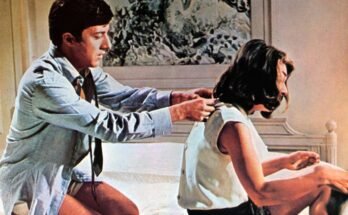
The night of the opening, my hairpins wouldn’t cooperate. That’s the official story. The true story is that I was shaking too hard to secure them, and when she found me alone in the dressing room — half-cammed, leotard under my wrap skirt, terror in every joint — she took the pins from my hand and started pinning.
“My opening solo is in fifty minutes,” I whispered to her reflection. “You’re the choreographer. The entire company answers to you. The board watches you from the box. And you’re pinning my hair like it’s the only thing left to choreograph.”
“Isn’t it?” she said — two words, the most she’d ever given me at once.
“If the stage manager calls places, she’ll see us at the mirror. Everyone will see. The lead and the choreographer, pins everywhere, and everyone will know why my counts kept drifting in rehearsal — why I kept looking at the mirror instead of the floor mark. Everyone will know it was never about the arabesque—”
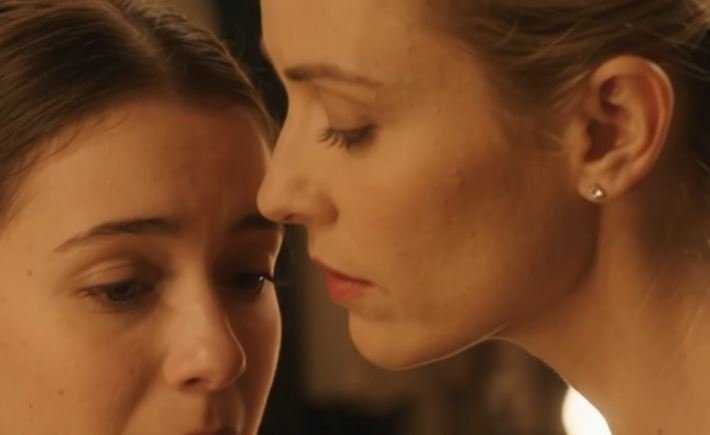
She turned my face with a hand on my jaw and kissed me. Slow. Backstage. A kiss that tasted like hairspray and every rehearsal that had ever run forty minutes too long.
“Places in ten, ladies. Elena? Sloane?”
Neither of us moved. Then Sloane — calm, deliberate, committing professional arson in pin curls — said: “Her hair needs five more minutes. So does my solo.”
“Sloane, you don’t have a—”
“I do now. Tell the orchestra the finale runs eight counts longer.”
She’d cut herself from the finale and given me the last eight counts — the solo she’d built for herself, the one the critics came to see. I danced the opening and I don’t remember a second of it. I remember only the finale: the curtain, the lights, the impossible silence before the music, and Sloane standing in the wings — not watching from the booth like choreographers do, but in the wings, in full view of the audience, arms crossed, counting under her breath so I could hear it.
One. Two. Three. Four.
I hit every count. The ovation lasted eleven minutes. They review dance in this city once a decade, and the review ran Sunday: “The finale’s restructured closing belonged, wholly and unmistakably, to a dancer who counts — and to the woman who taught her that counting is a kind of love.”
Sloane read it at the kitchen table, said “Hm,” and made tea. That’s Sloane. The Metronome. She proposed at the barre two years later, not with a ring but with a stick of chalk, and wrote on the mirror: “You count. I’ll keep time.”
We still run that studio together. The new girls whisper about her. They ask me, always eventually, what she’s like at home.
I tell them the truth: she still doesn’t compliment. She shows up. She pins my hair. She counts.
And when the stage manager calls places, we take our five minutes.