🌙 MIDNIGHT FILES — a fictional horror series. New episodes every Tuesday & Friday.
—
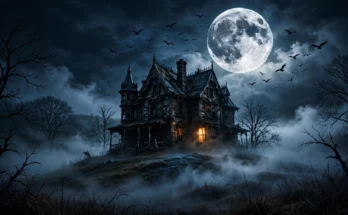
She didn’t sleep that first night in Harrow’s Hollow.
Not because of the cold — the old Victorian held its chill the way a held breath holds air — and not because of the dark, though the dark up here in Vermont was a different animal than the dark in Boston. In Boston, darkness was something you paid for: blackout curtains, a white-noise app, the hum of the street four floors down. Here, the dark was free, and it was total, and it pressed against the windows like it wanted in.
No. She didn’t sleep because of the voice.
“Maya.”
One word. Her name. Spoken from somewhere inside the house — or from inside the walls — just as the music box wound down on the parlor table. She had stood frozen in the doorway with the brass key still warm in her fist, and she had listened, and the house had given her nothing back. Just the tick of the cooling radiators. Just the wind combing through the bare maples outside.
She told herself it was the drive. Six hours from Boston, a gas-station coffee gone bitter in the cupholder, her whole life rattling in the back seat. Exhaustion did things. Exhaustion invented voices.
But she locked her bedroom door anyway. The lock was old and it caught, and the sound it made was deeply satisfying.
—
Morning came gray and thin, the way October mornings come in New England — light without warmth, like a photograph left out in the rain. Maya made coffee in a kitchen where the faucet coughed rust for ten full seconds before running clear, and she stood at the window and looked at the yard she now owned. An acre of wet leaves. A stone wall going soft with moss. A mailbox with VANE painted on the side in flaking white letters.
Eleanor Vane. Her grandmother. The woman in the lawyer’s letter, the woman she had never met, the woman who had left her all of this and no explanation whatsoever.
“Okay, Eleanor,” Maya said to the empty kitchen. “Show me what I’m supposed to do with a house.”
The house answered with silence. But it was a listening silence. She felt it the way you feel someone standing just behind you in a line.
She started with the ground floor, because that was what you did — you mapped a place before you trusted it. Parlor (the music box, closed now, its little ballerina frozen mid-turn). Dining room with a table long enough to seat twelve ghosts. A study with shelves of books swollen with damp, their spines soft as fruit. A conservatory where something had once grown riotously and now grew only dust.
And then the staircase.
It rose from the center hall in a slow, confident curve, the banister dark with a century of hands. The steps didn’t creak — that was the worst part. A house this old should have complained under her weight. It should have announced her. Instead it took her feet quietly, one by one, like it had been expecting her.
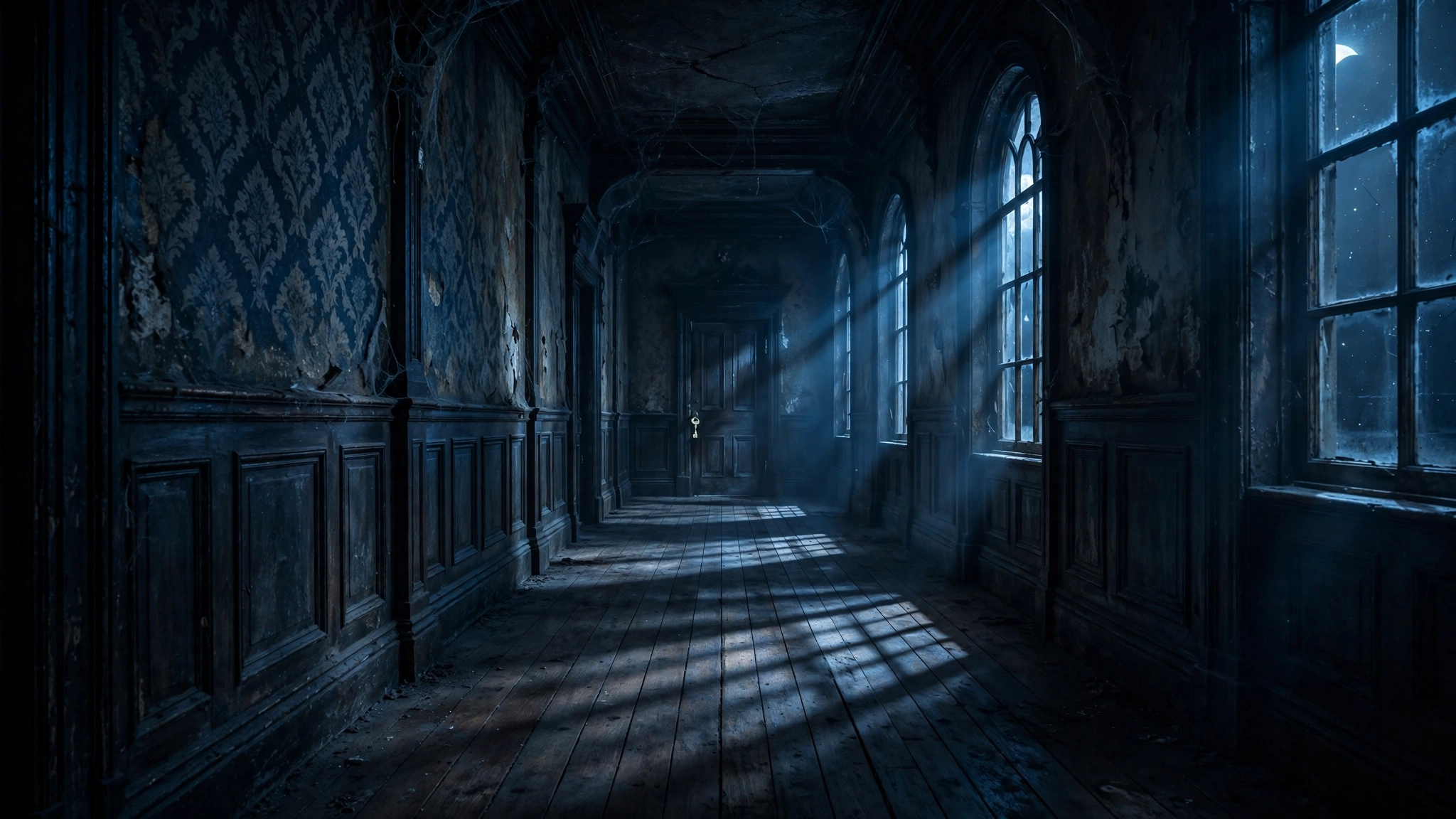
The upstairs hall ran the length of the house. Doors on both sides, all of them standing open — bedrooms stripped to the mattress ticking, a bathroom with a claw-foot tub stained the color of weak tea, a sewing room with a dress form wearing a shroud of cobwebs. All of them open. All of them empty. All of them, somehow, tidy, in the way of rooms that have been waiting a long time for someone to need them.
Except the last door.
It stood at the very end of the hall, and it was closed, and it was locked. Maya knew it was locked before she touched it, the way you know a held breath before it breaks. The knob was brass, gone green at the edges. There was no keyhole plate she could see — just a small, dark keyhole, old-fashioned, the kind that took a skeleton key.
Her hand went to her coat pocket before her mind caught up.
The brass key. The one from Eleanor’s letter. The one that had been warm.
It slid into the keyhole like it had been oiled yesterday. It turned without a sound.
Eleanor, Maya thought, what did you lock away up here?
—
It was a nursery.
That was the first thing her brain refused. A nursery — in a house where no child had lived, as far as she knew, in fifty years. A white crib with the rail up. A rocking chair angled toward the window. A mobile of carved wooden stars turning, turning, slowly overhead, though there was no draft; the air in the room was perfectly, impossibly still.
And it was clean.
Not the clean of a room scrubbed for sale. The clean of a room used. The blanket in the crib was folded back, the way you fold a blanket back when you’re about to lift a child out of it. A plush rabbit sat against the pillow, one ear flopped, the fur worn thin where small hands would have held it. On the wall, a growth chart — pencil marks climbing the doorframe, dates beside them in a neat, looping hand. Eleanor’s hand. The same hand as the letter.
Maya’s own hand was shaking. She pressed it flat against the doorframe to steady it, and the pencil marks went up past where her fingers reached, and the dates — she read the dates —
The rocking chair began to rock.
There was no one in it. The mobile’s wooden stars kept turning. The chair rocked forward, and back, and forward, with the slow patience of someone who had been doing it for a very, very long time and saw no reason to stop now.
Maya backed out of the room. She did not run — she would tell herself later that she did not run, that she withdrew, calmly, sensibly — and she pulled the door shut and she turned the brass key and the lock caught with that same deeply satisfying sound.
And then she saw it.
On the inside of the door — the side facing the nursery, the side she had just locked away — at the height where a small child’s hand would reach:
A handprint.
Small. Fresh. The dust on the door’s lower panel was otherwise undisturbed, a gray felt of years — except for this one perfect print, the fingers splayed, as if a child had pressed their palm flat against the wood.
From the inside.
Just now.
—
This is a work of fiction. Midnight Files is an original horror series — Episode 3, “The Photographs,” arrives Friday. Read Episode 1, “The Key” first if you haven’t. Follow the series so you don’t miss what develops in the dark.