The hospital kept Lily for three days.
Observation. Tests. A new monitor — better, they said, more reliable, impossible to shift. Sarah didn’t believe them. She sat by Lily’s crib and watched her breathe, her own body matching rhythm, her own lungs remembering what Scout had taught.
Marcus went home once. To feed Scout. To let her out. To stand in the nursery and look at the crib where his daughter had turned blue and his dog had turned her back.
Scout was at the threshold.
Not the nursery door — the hospital door. She had followed Marcus’s car. Three miles. Through traffic. Through red lights. Through the particular chaos of a dog who had decided that her post was not a room but a person, and her person was not home.
Marcus found her sitting at the ER entrance.
Security had called animal control. Called the police. Called anyone who could remove the black and white Border Collie who wouldn’t leave, who growled when approached, who sat with the particular stillness of a creature who had decided that this door was her threshold now.
Marcus brought her in.
Not officially. Not legally. Just walked her past security, past nurses, past the particular bureaucracy of a hospital that didn’t allow dogs but didn’t know how to stop a father who said she saved my daughter, she stays.
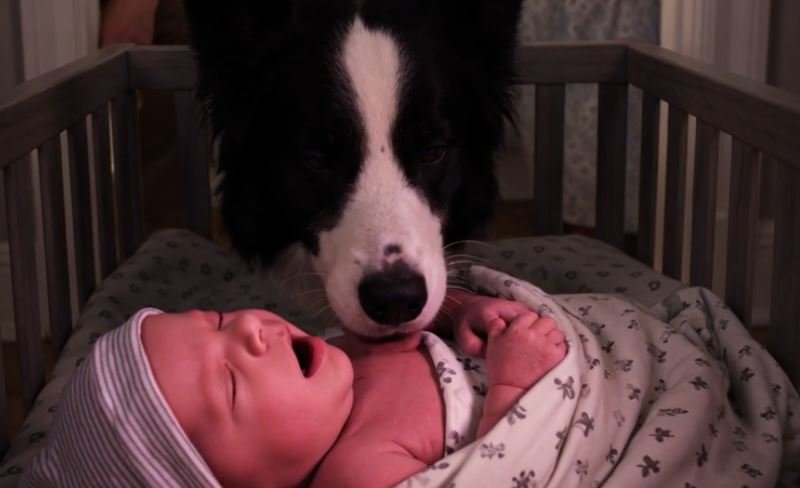
Scout sat by Lily’s crib.
For three days. She didn’t move. Didn’t eat — Marcus had to hand-feed her, small bites, the way you feed a working dog who won’t leave her post. Didn’t sleep — not really, just the particular doze that sentinels learn, half-aware, always ready.
The nurses called her The Monitor.
Not because of the device. Because of what she did. She watched Lily’s chest. She listened to her breathing. She positioned her body so that her nose was always near Lily’s face, always tracking the air, always ready to breathe for her if she forgot how.
Sarah watched Scout watch Lily.
She had spent her career studying lungs. Measuring oxygen. Tracking the mechanical rhythms of breathing. She had believed in devices, in data, in the particular certainty of numbers.
She had never believed in a dog’s nose.
But she watched Scout. Watched her track Lily’s breathing with a precision that no monitor matched. Watched her stiffen when the rhythm changed, relax when it steadied, adjust her position when Lily shifted, always optimizing, always perfecting, always present.
On the third day, Sarah asked the question she had been avoiding.
“How did she know?”
Marcus didn’t answer. He didn’t know. No one knew. The vet they consulted — a behaviorist, a specialist, a woman who had studied working dogs for 30 years — didn’t know either.
“Border Collies herd by reading intention,” she said. “They track eye movement, body language, the particular energy of a creature who is about to move. They don’t just react. They anticipate.”
“But Lily was sleeping,” Sarah said. “She wasn’t moving. She wasn’t about to do anything.”
The behaviorist looked at Scout. At the way she sat, rigid, nose to Lily, every fiber of her being oriented toward the small human in the crib.
“Maybe,” she said, “she wasn’t tracking what Lily was about to do. Maybe she was tracking what she was about to stop doing.”
Sarah brought Lily home on the fourth day.
New monitor. New rules. New vigilance. But also — new understanding. She didn’t dismiss Scout anymore. Didn’t see her as dander, as germ, as threat. She saw her as what she was: a creature who had chosen to serve, who had found her purpose in the gap beneath a door, who had saved a life not because she was trained but because she was present.
She allowed Scout in the nursery.
Not always. Not unsupervised. But when Lily slept, Scout could enter. Could sit by the crib. Could do what she had been doing for 9 months — listen, track, anticipate, protect.
Scout didn’t change.
She didn’t become affectionate. Didn’t lick Lily’s face or wag at her presence or do any of the things that “good dogs” were supposed to do with babies. She just sat. Nose to the crib. Body oriented. Listening to air that humans couldn’t hear, tracking rhythms that devices couldn’t catch, being present in a way that no technology could replicate.
Lily grew.
The premature lungs developed. The apnea episodes stopped. The monitor — the new one, the better one — showed green, always green, never shifting, never failing. Sarah checked it less. Trusted it more. Stopped waking 20 times a night.
But Scout still woke.
Every night. At 3:47 AM. The time. The moment. The particular minute when she had jumped into a crib and breathed for a baby who had forgotten how.
She would stand. Rigid. Nose to the air. Listening. Tracking. Confirming that the rhythm held, that the lungs worked, that the night was safe.
Then she would lie down. Tail thumping once. Twice. Her duty done. Her purpose served.
Lily called her “Cout” when she learned to talk.
Her first word, almost. After Mama, after Dada, after the necessary names. “Cout.” With a particular reverence. A particular love. The way you name something that has always been there, that you don’t remember meeting because it was present before memory began.
Scout died at 14.
Not suddenly. Slowly. The particular decline of a working dog who had worked too hard for too long. Her hips failed first. Then her hearing. Then the particular sharpness that had made her Scout, that had made her The Monitor, that had made her the creature who heard what no one else could hear.
Sarah was with her at the end.
Not Marcus. Not Lily, who was 9 now, who understood death in the abstract way that children understand it, who wasn’t ready for the concrete reality. Just Sarah. The doctor who hadn’t believed in dogs. The mother who had learned to believe in this one.
She held Scout’s paw. She listened to her breathing — the same breathing that had guided Lily’s, that had taught a premature baby how to live, that had been the metronome for a life.
Scout’s breathing stopped.
Not dramatically. Not with a gasp. Just stopped. The particular silence that Scout herself had taught Sarah to fear, to recognize, to never ignore.
Sarah sat with her for an hour. Then she did what she had learned from Grave — from the biker who ran the funeral home, who had buried Scout’s predecessor, who had taught her that death deserved dignity.
She buried Scout in their garden.
Not deep. Not hidden. In a place where Lily could visit, where Marcus could sit, where Sarah could remember that she had once been a doctor who didn’t believe in dogs, and was now a mother who believed in nothing so much as the particular grace of a creature who chose to serve.
The marker was simple. Sarah carved it herself — not well, not professionally, but with her own hands, her own effort, her own love.
SCOUT — The Monitor. She Heard What We Couldn’t. She Breathed When We Failed. She Stayed.
Lily visits every day. She talks to Scout. Tells her about school, about friends, about the particular challenges of being 9. She doesn’t cry. Not often. Because Scout taught her that presence is stronger than grief, that listening is deeper than speaking, that the best way to honor the dead is to keep breathing.
Sarah became an advocate.
Not for dogs in general. For working dogs in hospitals. For the particular intelligence of breeds like Scout, who could read intention, track rhythm, anticipate failure before it happened. She wrote papers. Gave talks. Changed policies.
She placed a dog in the NICU.
Not Scout. Never Scout. But a successor. A trained successor, certified, official, everything that Scout hadn’t been. A Border Collie named Continuance — Connie — who sat by incubators and listened to premature lungs and alerted nurses when the rhythm changed.
Connie saved 12 babies in her first year.
Sarah counted them. Named them. Tracked them. Wrote about them in journals that other doctors read, that changed practice, that saved more babies in more hospitals with more dogs.
But she never forgot.
Every night at 3:47 AM, she woke. Not from fear. From habit. From the particular rhythm that Scout had established, that her body still remembered, that would stay with her until her own breathing stopped.
She would check Lily — now 12, now healthy, now sleeping with the particular peace of a child who had never known that she almost didn’t make it.
She would check the monitor — still green, always green, technology improved by the failure that had almost killed her daughter.
And she would go to the garden. To Scout’s grave. To the marker that she had carved with her own hands.
She would sit. She would listen. She would breathe.
Deep. Deliberate. The slow, rhythmic breath of a working dog who had taught her that the best way to honor the dead is to keep living, keep listening, keep being present for whatever comes next.
Scout had taught her that.
Not with words. With presence. With the particular grace of a creature who sat at a threshold and decided that the gap beneath a door was wide enough to save a life.