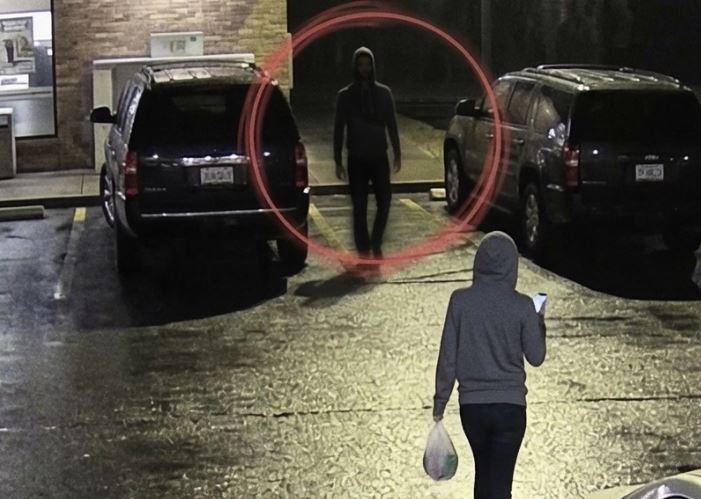
At 3:14 a.m. on a rainy Thursday, a convenience store security camera quietly recorded what appeared to be another routine night.
The footage showed a customer leaving the store with a bottle of water and a snack. She walked across the nearly empty parking lot toward her silver sedan, unlocked the driver’s door, and drove away without incident.
Nothing looked unusual.
Store employees archived the footage, and no one thought about it again.
Two days later, detectives investigating a missing person case requested surveillance footage from businesses within a five-mile radius. The convenience store happened to be one of them.
The original review took only a few minutes.
Investigators watched the customer exit the store, cross the parking lot, and leave.
“No relevant activity,” one detective noted in the report.
The footage was filed.
Days later, a digital evidence analyst reopened the recording while checking camera synchronization across nearby businesses. Rather than watching the customer, he focused on the background.
Near the edge of the parking lot, between two parked SUVs, something caught his attention.
A person.
Standing completely still.
The figure wasn’t moving, waving, or approaching anyone. It simply remained in the shadows, almost blending into the darkness.
The analyst paused the video.
Zoomed in.
Then rewound.
The figure had been visible from the beginning of the recording.
Yet everyone reviewing the footage had unconsciously focused on the woman walking to her car. The background had become invisible.
Investigators returned to the store and compared the footage with recordings from other cameras.
Oddly, Camera 4 showed the figure clearly.
Camera 3, which covered the same area from a different angle, did not.
Neither did Camera 5.
Technicians tested the surveillance system and found no signs of tampering or corruption. Time stamps matched perfectly, and the recording appeared authentic.
Police searched the area behind the parked vehicles. Tire marks suggested a vehicle had been parked there earlier that night, but there was no evidence linking it to the missing person investigation.
Detectives eventually identified the owner of one of the SUVs. He had left work hours earlier and knew nothing about the recording.
The identity of the shadowed figure was never confirmed.
Months later, forensic video specialists concluded that the person was likely real—but the limited resolution made identification impossible. Whether the individual was simply waiting for a ride, watching the parking lot, or connected to the missing person case remains unknown.
The missing person investigation was eventually solved through unrelated evidence, and no charges were ever filed involving the figure in the parking lot.
Even so, the footage continues to be used in investigative training sessions for one important lesson: our eyes naturally follow motion, causing us to miss details hidden in the background.
That single overlooked figure changed how detectives reviewed surveillance evidence.
And it leaves one lingering question.
If investigators missed someone standing in plain sight 11 times…
What else have they missed in other cases?