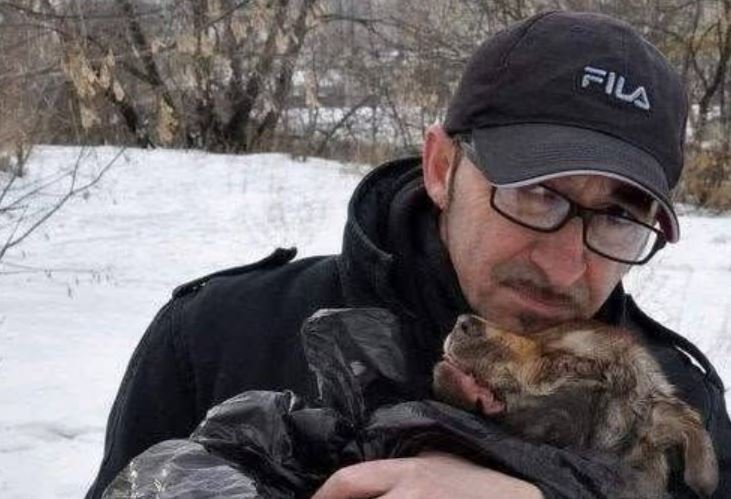
When the war reached Ukraine, millions faced the same impossible choice: stay and risk everything, or leave in search of safety. Roads filled with families fleeing violence. Homes and businesses were abandoned. But for Andrea Cisternino, an Italian animal rescuer living in Ukraine, the decision was never just about his own survival. More than 400 rescued dogs depended on him.
They couldn’t understand evacuation routes. They couldn’t cross borders. They couldn’t search for food in a devastated landscape. They couldn’t call for help or make plans for the future. They were completely dependent on the man who had promised to care for them.
Andrea knew that leaving would mean abandoning animals who had already survived neglect, fear, and uncertainty. Many had been rescued from terrible circumstances and brought to his shelter because they needed protection. To walk away during the most dangerous moment of their lives would have felt like a betrayal.
So he stayed.
A Shelter Full of Lives That Couldn’t Be Left Behind
A rescue shelter isn’t just a place where animals are stored. It’s a collection of individual lives — each with its own history, fear, personality, and need for care. Some dogs arrive injured. Others have been abandoned, mistreated, or left to survive without reliable food and shelter. Over time, a rescuer becomes responsible not only for feeding them but for helping them feel safe.
Andrea’s shelter in Ukraine had become home to hundreds of dogs. They relied on him for food, clean water, medical attention, protection, and daily stability. In peaceful times, meeting those needs would already require enormous dedication. During wartime, the challenge became far more difficult.
Supplies were limited. Transportation was dangerous. Electricity, fuel, medicine, and food could become uncertain at any moment. Every ordinary task carried additional risk. Yet the dogs still needed to be fed. They still needed shelter from the weather. They still needed someone to notice when they were sick, frightened, or injured.
War doesn’t pause the basic needs of animals.
A dog doesn’t understand why food deliveries are delayed or why the sound of distant explosions has changed the atmosphere around the shelter. The animals simply experience the consequences. Andrea’s presence gave them something essential: continuity. Even when the world outside was unstable, there was still a person who arrived, worked, and cared for them. His daily routine became a form of protection.
Courage Measured in Ordinary Tasks
Stories of bravery are often told through dramatic moments — someone running into danger, rescuing a stranger, or making a split-second decision that changes everything. Andrea Cisternino’s courage was different. It appeared through ordinary tasks repeated under extraordinary conditions.
He continued feeding the dogs. Checking on them. Protecting them. Finding ways to keep the shelter operating. These actions may sound simple, but their difficulty increased with every new uncertainty the war created.
Feeding more than 400 dogs is a demanding responsibility under normal circumstances. During conflict, it becomes a logistical nightmare requiring planning, persistence, and constant adaptation. Food must be found, transported, stored, and distributed. Water must remain available. Medical needs must be addressed. Damaged facilities must be repaired as much as possible. Every task depends on resources that may suddenly become impossible to obtain.
Andrea couldn’t afford to think only about the immediate danger. He also had to think about tomorrow’s meals, the next delivery, the safety of the shelter, and the needs of animals who couldn’t speak for themselves.
His courage was not the absence of fear. Remaining in a war zone doesn’t mean a person is unaware of danger. It means the person recognizes the danger and still believes that something else requires their presence.
Andrea’s commitment was strengthened by the fact that the dogs had already placed their trust in him. They had no alternative caregiver waiting somewhere beyond the border. They couldn’t make the journey alone. They couldn’t decide to leave. Their survival depended on his willingness to continue.
In this way, his work became a promise renewed every morning.
“I Won’t Abandon Them After Saving Them”
Andrea’s words captured the heart of his decision: “I will stay with my animals and the shelter. I won’t abandon them after saving them.”
The statement is powerful because it expresses a form of loyalty that doesn’t depend on convenience. It’s easy to care for someone when conditions are comfortable, resources are available, and the future appears predictable. The deeper meaning of compassion emerges when caring becomes difficult.
Andrea understood rescue as more than a single moment of removing an animal from danger. Saving a dog was only the beginning. After rescue came years of responsibility — feeding, treatment, protection, patience, and companionship. His promise didn’t end when the dogs reached the shelter. It continued through every challenge that followed.
This perspective offers an important lesson about animal rescue. A photograph of a rescued dog may show a joyful moment, but behind that moment is often a long-term commitment. Rescue organizations and individual rescuers must continue caring for animals long after public attention fades. They must handle costs, medical needs, overcrowding, behavioral difficulties, and the emotional strain of witnessing suffering.
Andrea’s choice made that responsibility visible. He didn’t see the dogs as a project that could be abandoned when circumstances became dangerous. He saw them as lives entrusted to his care.
The World Watched as One Man Stayed Behind
As news of Andrea’s situation spread, people around the world began to follow his efforts. His story resonated because it offered a deeply human contrast to the destruction surrounding him. While war often produces images of separation, loss, and abandonment, Andrea’s shelter represented a place where someone was choosing to remain present.
The dogs became symbols of vulnerability, but they also represented trust. They had no understanding of international politics or military strategy. They only knew the person who brought them food, protected them, and continued returning to their shelter.
Many people who heard about Andrea were moved by the simplicity of his mission. He wasn’t trying to become famous. He was trying to keep hundreds of animals alive.
His work also reminded audiences that wars affect more than human communities. Domestic animals, farm animals, wildlife, and shelter populations can all suffer when infrastructure collapses and people are forced to flee. Animals may be left behind, separated from their families, or exposed to hunger and danger. Rescue workers often face difficult decisions about which animals can be evacuated and which must remain in place.
Andrea’s story brought attention to this overlooked dimension of humanitarian crisis. It encouraged people to think about animal welfare as part of compassion during war, not as an issue that becomes irrelevant when human emergencies arise.
The global response also showed how one person’s dedication can inspire others. Supporters may contribute supplies, donations, transportation assistance, or public awareness. Even when they can’t physically reach the shelter, they can help ensure that the animals’ needs aren’t forgotten. Andrea’s courage created a connection between a shelter in Ukraine and people far beyond its borders.
Loyalty When Everything Else Falls Apart
At the center of Andrea Cisternino’s story is the idea of loyalty. Loyalty is often associated with family, friendship, or national identity, but it can also exist between humans and animals. Dogs don’t measure loyalty through words. They experience it through repeated actions: the person who returns, the hand that feeds them, the voice that reassures them, and the shelter that remains available when the outside world becomes frightening.
Andrea’s presence communicated something the dogs could understand. They were not being forgotten. They were still worth protecting.
His decision also reveals how responsibility can become a source of strength. The number of dogs at the shelter might have seemed overwhelming. The dangers of war might have offered countless reasons to leave. Yet the very fact that so many lives depended on him gave his days a clear purpose. He had work to do. There were animals waiting for food. There were needs that couldn’t be postponed.
Purpose doesn’t eliminate fear, but it can help a person move through fear one task at a time.
A Promise That Became a Message of Hope
Andrea Cisternino’s story is ultimately about more than one shelter or one group of rescued dogs. It’s about the meaning of a promise when circumstances become almost impossible.
He could have walked away. He could have decided that the risks were too great and that the animals would have to fend for themselves. Instead, he stayed with the dogs who depended on him.
His actions reminded the world that courage can take many forms. Sometimes it looks like a dramatic rescue. Sometimes it looks like quietly preparing food, repairing a shelter, searching for supplies, or returning to frightened animals day after day.
The dogs may never understand the scale of the sacrifice Andrea made. They don’t know how many people have heard his story or how widely his words have traveled. But they know the practical meaning of his commitment: someone remained. Someone cared. Someone did not abandon them.
In a world where war can destroy homes, separate families, and make the future uncertain, that kind of loyalty becomes profoundly meaningful.
Andrea’s story also offers a reminder to everyone who supports animal welfare. Rescue isn’t only about saving animals from immediate danger. It’s about standing beside them afterward, especially when their needs become difficult and their stories are no longer receiving attention. The true measure of compassion is often found in what happens after the dramatic moment has passed.
Andrea Cisternino continued to show that a life of rescue is built on responsibility, patience, and devotion. His shelter became a symbol of hope not because the circumstances were easy, but because he refused to let hardship erase the value of the lives entrusted to him.
His message remains simple and unforgettable: when you choose to save a life, don’t forget the promise that comes with it.