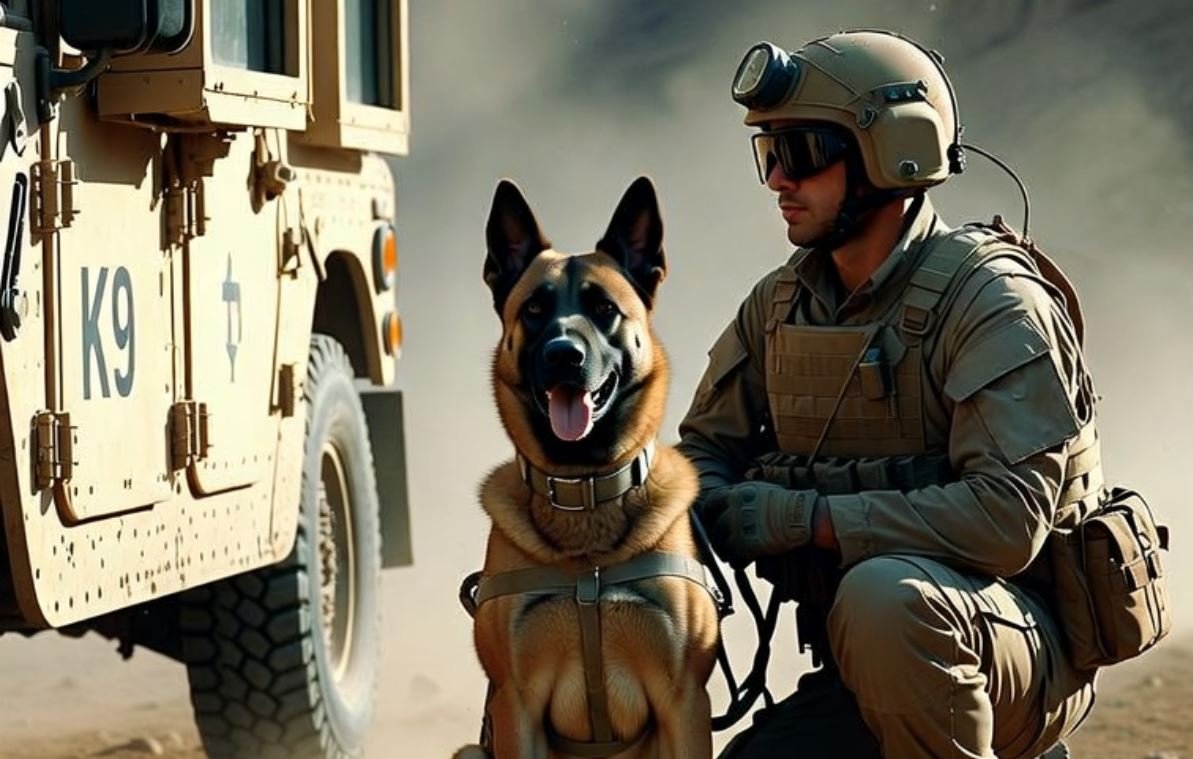
Sgt. Danny Cole didn’t want a dog. He wanted a deployment without complications. He got Atlas — a Belgian Malinois with PTSD from a previous handler’s death, a dog who wouldn’t eat for 3 days when they first paired.
“Broken dog for a broken soldier,” his sergeant major said. Not unkind. Just true.
March 14th, 2019. Kunar Province. The mission was route clearance. Boring. Dangerous. Necessary. The road had killed 3 MRAPs in 2 months. Command wanted it open for a supply convoy.
Atlas walked point. Off-leash. 20 meters ahead. Danny followed, rifle ready, hand on the leash clip even though it wasn’t attached. Trust exercise. The Army’s idea of team building.
First IED: Atlas stopped at a culvert. Sat. Nose pointing. Danny marked it. EOD confirmed: 15 pounds of HME, pressure plate, standard Taliban fare.
Second: Rock pile. Same signal. Same result.
Third, fourth, fifth: A pattern. Atlas moved like he was reading a book Danny couldn’t see. Each device was different — pressure plate, command wire, victim-operated. Atlas found them all.
By the 12th, Danny’s squad was laughing. Nervous laughter. The kind that means “this is impossible and we’re watching it happen.”
Then the 13th.
Atlas stopped. But different. Body low. Tail tucked. Not the confident sit. The afraid sit. The one he’d only done once before — when a mortar hit the kennel and killed the dog in the next cage.
Danny froze. Hand signal: hold. The squad stopped. He knelt beside Atlas. The dog was trembling. Not shaking. Vibrating. Like a tuning fork.
Danny called EOD. They came slow. Careful. Found the device — standard pressure plate. But beside it, under a rock: a cell phone. Connected. Armed. Somebody watching. Waiting for the convoy to reach the kill zone.
EOD disabled it. Danny followed the command wire with his eyes. Up the mountain. To a ridge. He saw movement. Glass flash. Binoculars.
They caught him 2 hours later. Taliban fighter, 19, educated in Karachi, spoke English. Asked the interpreter: “How did the dog know number 13 was different?”
Danny didn’t answer. He still doesn’t know. Atlas smelled fear maybe. Or human intention. Or the electromagnetic field from the cell phone. Or something no sensor will ever detect.
He just knew.
Six weeks later. Different patrol. Different road. Ambush from a grape hut. Danny took shrapnel to the thigh. Went down. Bleeding. Heavy.
Atlas didn’t engage the enemy. That wasn’t his training. He stood over Danny. Body shield. Taking fire. Refusing to move. The medic had to drag him to treat the wound. Atlas bit the medic’s sleeve. Not hard. Don’t touch him. He’s mine.
The medevac came. Danny woke up in Germany. First question: “Atlas?”
In the corner. Bandaged. Shrapnel to the shoulder. Sleeping on Danny’s boots. They’d flown him commercial. No crate. In the cabin. Because the flight crew refused to cargo him.
Danny wrote a letter that night. To his childhood dog, a Lab named Buster, dead 10 years. “I understand now,” he wrote. “I’m sorry I didn’t before.”
Atlas retired in 2021. Lives with Danny in Colorado. Hikes every day. Still stops at rock piles. Sits. Looks at Danny. “Not this one,” Danny says. “Not today.”
Atlas wags. Moves on.
Some dogs detect bombs.
Atlas detects intention. The difference between a device and a trap. Between danger and malice.
No medal for that. Just a soldier who understands now. And writes letters to a dead dog to say thank you.