8D was a man named Yusuf, a commercial photographer who’d lived in the building for a decade and had, somewhere along the way, become its unofficial chronicler. His exhibition — “Almost: A Decade of Near-Misses” — opened the following spring at a gallery in the neighborhood, and it contained eleven photographs of me and Sloane, spanning a year.
Us at the mailboxes, reaching for adjacent boxes at the same moment, both mid-apology. Us in the elevator, her getting off on 6 as I got on from 8, our reflections almost overlapping in the closing doors. Us in the lobby during a blackout, sitting on opposite ends of the same couch by candlelight, each reading our phones, neither speaking.
The captions were brutal. Under the mailboxes photo: “September. Ninety degrees of separation.” Under the elevator: “October. The doors are faster than they are.” Under the blackout couch: “November. THREE HOURS. I lost money on this one.”
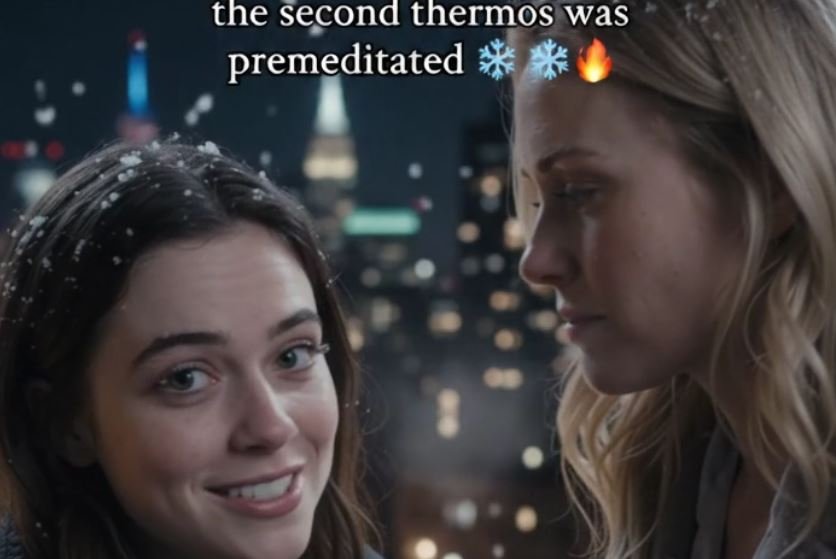
The rooftop kiss photo — first snow, eyelash, her hand at my jaw — was the portfolio’s closer, and its caption was different from the others. It said only: “December. Finally. Also, you’re welcome — I reported the 6th floor laundry leak in September so she’d use the 8th floor machines. Infrastructure.”
“He sabotaged my laundry room,” Sloane said, at the exhibition, staring at the caption.
“I gave you both a shared enemy and a shared floor,” Yusuf said, unrepentant, pouring wine. “The leak was structural. I merely… publicized it.”
The building had followed our story, it turned out, the way you follow a serialized drama. The lobby corkboard — which I’d assumed was for package notices — had a side column Yusuf maintained called “THE LONG GAME,” tracking our near-misses with a tally system the residents had developed. By November, the lobby pool had us meeting “by January, rooftop if it snows.” Yusuf had submitted that entry himself.
“You had eleven months,” I told him at the show. “You could have introduced us.”
“And robbed you of December?” He gestured at the snow photograph, at the two of us lit by string lights. “That’s the best one. Nothing before it was worth keeping.”
Sloane — 6B, insomniac, thermos-carrier — had her own confession, delivered on our roof that first night after the kiss, over tea that was by then lukewarm: she’d started coming to the roof at 2 AM in October. Not for air. Because she’d noticed MY light — my kitchen window was visible from her bedroom, and my sleepless kitchen existed on roughly her sleepless schedule, and she’d been watching my kettle boil like a lighthouse keeper’s daughter for two months.
“The second thermos was premeditated,” she admitted. “I’ve carried it up every night since October. You’re the first person it’s ever been for. Before that it was just… hope, in beverage form.”
We dated in the building’s full view, which the lobby pool had priced in. Yusuf documented it all: the first grocery trip, the first key exchange (the corkboard updated to “6+8=?” with a ring doodle), the night we told him, at his own door, and he nodded with the satisfaction of a man cashing out and said, “January. I had January. I always have January.”
The engagement happened on that roof, first snow of the FOLLOWING year, 2 AM. Yusuf was there — we’d told him in advance, obviously; the man had earned it. He photographed it from the doorway, thermos in one hand, camera in the other, crying onto his lens and denying it later at the gallery.
The exhibition’s final addition, hung after the engagement: the proposal photo, captioned in Yusuf’s hand:
“One year. Eleven almosts. One finally. The pool pays out. The tea stays warm. Roof when it snows — always.”
We married in June. The favors were tiny thermoses. Yusuf’s toast was one line: “I give it a decade. The near-misses were just the loading screen.”
He’s documenting the marriage now. There’s already a corkboard column: “THE LONG GAME: PART TWO.”