The shop was called Second Waltz, a narrow vintage store on a street I’d walked a hundred times and never entered. The bell over the door was my whole reason for stopping — it rang a real note, a waltz interval, and something about a doorbell with musical opinions made me walk in.
I was browsing for nothing in particular when the slip dress found me. 1960s, champagne satin, my exact size — the kind of find that vintage people describe in hushed tones. The curtain stall in the back had a round mirror and a hook and a curtain that closed about ninety percent of the way.
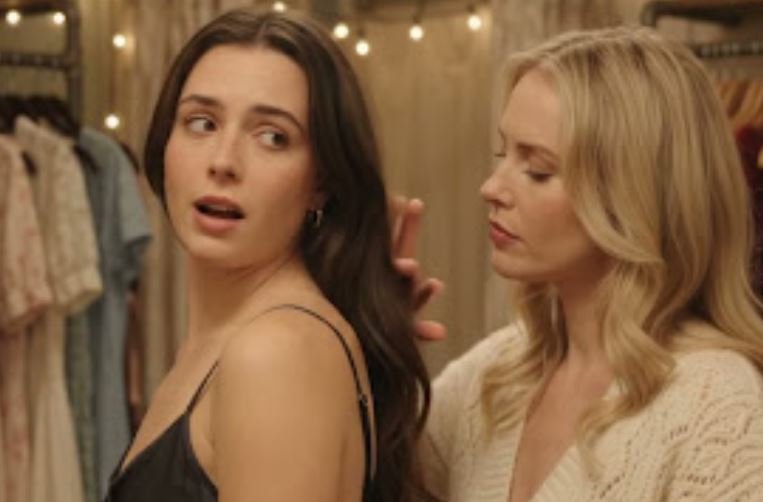
The zipper defeated me at the three-quarter mark. I was twisted like a phone cord when the curtain moved and a blonde in a knitted cardigan said, “Hold still,” lifted my hair off my neck, and finished the zipper with two fingers and total unhurried professionalism.
“You’ve appeared silently twice now,” I whispered, meeting her eyes in the round mirror.
“I’m Mara,” she said — not Sloane, this one’s different, her name was Mara, the shop owner’s niece. “My aunt sends me back when someone takes the champagne dress. It’s been waiting.”
“Waiting for—”
“You. Statistically. The dress has rejected four people this year. You put it on and it fit. Aunt Dee heard the hanger stop moving and sent me.”
The bell at the front rang — a customer entering — and Dee’s voice floated back, unhurried and knowing: “Take your time, honey, the zipper dresses take the longest!”
“She sent you on purpose,” I breathed.
“The dress is priced at one dollar,” Mara said. “The tag says MINE. It’s not a price. It’s a label. She’s been writing MINE on things that belong in this family since 1974.”
She turned me around by the shoulders then, and kissed me — slow, vintage, tasting like the dust of a thousand stored summers and the cedar blocks in every drawer of that shop. The curtain stayed ninety percent closed. Dee, out front, sold a customer a hat and hummed.
I bought the dress. Obviously. For one dollar.
Aunt Dee rang it up herself, wrapped it in tissue without being asked, and said, “My sister — Mara’s mother — I met her in this shop in 1974. She came in for a coat. I wrote MINE on the tag. Took me two years to confess what I meant.” She handed me the bag. “Mara’s been waiting on that dress since spring. I was starting to worry the dress was broken.”
The first date was at the shop after hours — Dee locked the door, flipped the sign to CLOSED but kept the string lights on, and put on a record. We sat on the floor between the racks and drank wine from teacups while Dee taught me the waltz step that matched her doorbell, counting “one-two-three, one-two-three” with a customer’s patience.
Mara and I have been together three years. I wear the dress every anniversary — it still fits, smugly, like it knew. Dee retired last year and handed us the shop: Mara runs the floor, I handle the books, and the champagne dress hangs in the front window now, on display, with its original tag still attached.
One dollar. MINE.
People ask about the tag all the time. Dee’s answer — now our answer, since she made us memorize it — is always the same:
“It’s not for sale. It’s a family tradition. If it ever fits you, you’ll find out.”