Original Mystery Fiction
Every night at 1:11 a.m., the last bus on Route 11 stopped outside a house that had been empty for seventeen years.
Driver Marcus Hale had worked the night shift for almost six years. He knew every stop, every broken streetlight and every passenger who regularly rode after midnight.
The abandoned house on Bell Street was not an official stop.
There was no shelter, no sign and no street number visible from the road. The property had been boarded up after a fire in 2007, and no one had lived there since.
Still, at exactly 1:11 a.m., Marcus always heard the stop-request bell.
The first time it happened, he assumed a passenger had pressed it by mistake. He pulled over, opened the front doors and looked into the darkness.
No one was waiting outside.
He closed the doors and continued driving.
The next night, the bell rang again.
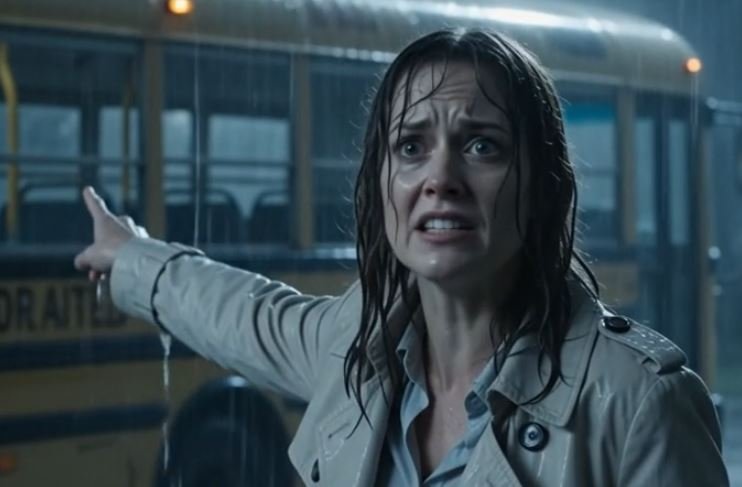
This time, Marcus saw a figure standing beside the abandoned house. It was a woman wearing a pale coat, with her head lowered against the rain.
Marcus opened the doors.
The woman stepped onto the bus without saying a word.
She walked to the last row and sat beside the window.
Marcus checked the mirror. Her face was hidden by wet hair, but he could see one detail clearly: she was holding a paper bus ticket in both hands.
The ticket was old and yellowed, like something printed decades ago.
When the bus reached the next stop, Marcus looked in the mirror again.
The seat was empty.
The woman was gone.
He stopped the bus and checked the aisle. No one had moved past him. The rear emergency door was locked. The windows were sealed.
The paper ticket remained on the seat.
Its date was October 14, 2007.
Marcus took it home and placed it in a kitchen drawer. The following night, he told himself he would ignore the bell.
At 1:11 a.m., it rang.
Marcus kept driving.
The bus engine began to shake.
The interior lights flickered, and every passenger turned toward the back row at the same time. There were only four people on the bus, but none of them seemed to notice that anything was wrong.
Then the bell rang again.
Marcus looked into the mirror.
The woman in the pale coat was sitting in the last row.
This time, she was not looking out the window.
She was staring directly at him.
Marcus pulled the bus over at the next legal stop and switched on the overhead lights. When he turned around, the seat was empty again.
On the floor lay another ticket.
The date was October 14, 2007.
Under the date, someone had written a single sentence in blue ink:
Do not let him sit in the last row.
Marcus reported the incident to his supervisor, who laughed until he saw the ticket. The supervisor stopped laughing and told Marcus that Route 11 had been involved in an accident seventeen years earlier.
The bus had lost control during a storm and crashed into the abandoned house on Bell Street.
The driver survived.
A passenger named Elena Voss did not.
“She was sitting in the last row,” the supervisor said. “They found her coat, but they never found the ticket.”
Marcus asked what he meant by “him.”
The supervisor looked toward the window.
“According to the old report, Elena kept telling people there was a man on the bus who did not have a ticket.”
That night, Marcus considered calling in sick. Instead, he arrived early and inspected every seat before starting his route.
The bus was empty.
At 1:05 a.m., he checked the rear camera monitor. The last row was empty.
At 1:10, he checked again.
A man was sitting there.
Marcus spun around.
The seat was empty.
He looked at the monitor again. The man was still visible on the screen. He wore a dark raincoat and sat perfectly still, facing the camera.
Marcus grabbed the radio.
“Control, I need assistance on Route 11.”
Static answered.
The bus clock changed to 1:11 a.m.
The stop-request bell rang.
Marcus saw the abandoned house ahead. Its boarded windows were black against the rain. A woman in a pale coat stood beside the road.
Behind her stood the man from the camera.
Marcus locked the doors.
The woman raised one hand and pointed toward the back of the bus.
The man was no longer beside the house.
He was standing in the aisle.
Marcus could see him in the mirror, but none of the passengers reacted. The man began walking toward the driver’s seat.
His shoes made no sound on the rubber floor.
Marcus pressed the emergency button.
The bus accelerated.
The speedometer climbed from thirty to fifty, then sixty miles per hour. The rain blurred the windshield, and the road lights stretched into long white lines.
The man stopped directly behind Marcus.
A voice whispered, “You missed my stop.”
Marcus looked at the mirror.
The man had no reflection.
The bus turned sharply toward Bell Street.
Marcus fought the steering wheel, but the bus would not respond. The abandoned house appeared ahead, exactly as it had in the old accident photographs.
The woman in the pale coat was standing in the road.
Marcus slammed on the brakes.
The bus stopped one inch from her.
Every light inside the bus went out.
For a moment, there was complete silence.
Then the old woman’s voice came from the last row.
“He was never a passenger.”
The emergency lights turned red.
Marcus looked through the mirror. The man was leaning over the woman’s empty seat, searching beneath it.
The woman in the pale coat appeared beside him.
She placed one hand on his shoulder.
The man turned toward her, and Marcus saw that his face was not a face at all. It was a dark, empty blur beneath the rain-soaked hood.
The woman pulled him backward.
The bus doors opened.
Cold wind swept through the aisle.
Both figures disappeared into the darkness outside.
The lights returned.
Marcus was alone with the four passengers, all of whom were still staring forward as if nothing had happened.
At dawn, police found the bus parked outside the abandoned house. Marcus was sitting behind the wheel, unable to explain how he had arrived there.
The security camera inside the bus had recorded everything.
Or almost everything.
The footage showed Marcus stopping at 1:11 a.m. It showed the woman boarding. It showed the empty last row. It showed the bus speeding toward Bell Street.
But the camera never recorded the man.
The supervisor watched the footage twice and then paused it at the final frame.
A new passenger was sitting in the last row.
Marcus.
He was wearing the same uniform, but his face was pale and his hands were pressed against the glass from inside the bus.
The supervisor turned toward Marcus.
“You were never in the driver’s seat at the end,” he said.
Marcus looked at the screen.
The passenger wearing his face slowly raised one finger and pointed toward the clock.
The time on the recording was 1:11 a.m.
Then the image changed.
The bus was empty.
The supervisor asked Marcus what happened after the doors opened.
Marcus could not remember.
He only remembered the woman’s voice.
“He was never a passenger.”
Three days later, Marcus resigned from the bus company and moved to another state.
He never rode public transportation again.
But every night at 1:11 a.m., the stop-request bell rang inside his new apartment.
There was no bus nearby.
No bell in the building.
No explanation.
On the fourth night, Marcus found a yellowed paper ticket beneath his bedroom door.
The date printed on it was not October 14, 2007.
It was tomorrow’s date.
On the back, in blue ink, someone had written:
The last passenger is waiting for the driver.