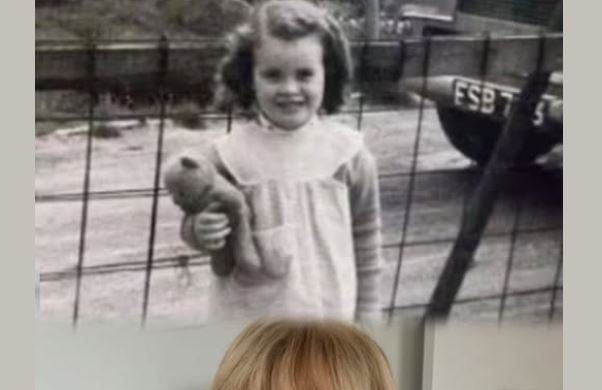
Susan Boyle grew up in West Lothian, Scotland, as the youngest of ten children in a crowded, working-class home. She was deprived of oxygen at birth — a complication that doctors believed had left her with a learning disability. That diagnosis followed her for most of her life. It shaped how teachers treated her, how classmates saw her, and how she saw herself.
For decades, it was wrong.
A Childhood That Was Anything but Easy
Boyle has described her school years with painful honesty. She was mocked, isolated, and frequently punished — not for misbehaving, but for simply being different.
“You’re looking at someone who would get the belt every day… ‘Will you shut up, Susan!’ — whack!” she told the Mirror, referring to the leather strap once used for discipline in Scottish schools.
That kind of treatment leaves a mark. Boyle grew up believing something was fundamentally wrong with her — because that’s what she had been told.
Music Became Her Escape
What nobody could take from her was her voice. Music became her refuge, a place where she could be powerful instead of pitied.
And the person who believed in that voice most fiercely was her mother, Bridget.
“My family were the ones who were so supportive and pushed me to do something more with my life,” Boyle said. “My mother, in particular, was the driving force who made me promise I would do something with my voice and my life.”
It was a promise Boyle would carry with her for the rest of her life — even when it seemed impossible.
Losing the One Person Who Believed in Her
In 2007, not long before her now-legendary Britain’s Got Talent audition, Bridget passed away at 91.
Boyle was devastated. The woman who had pushed her, protected her, and told her she was capable was gone. What followed was a period of profound grief.
“I was very lonely and very upset,” she said. “I had panic attacks and felt I couldn’t cope. I didn’t eat or sleep properly.”
For a while, she stepped away from everything — including her voice.
The Audition That Changed Everything
When Boyle finally walked onto the Britain’s Got Talent stage in 2009, it was the first time she had sung publicly since losing her mother. The audience’s initial smirks are now part of television history. Then she opened her mouth.
Her performance of “I Dreamed a Dream” became one of the most-watched auditions ever recorded. The judges’ stunned faces, the audience leaping to their feet, the tears — it was a moment that felt like a fairy tale unfolding in real time.
But for Boyle, it was something far more personal. She wasn’t just performing. She was keeping a promise.
The Diagnosis That Came Decades Too Late
Boyle went on to sell more than 25 million albums worldwide — a stunning achievement for anyone, let alone someone who had spent most of her life being underestimated.
Then, after she had already become a global star, came the revelation that reframed everything.
Boyle learned that what doctors had long attributed to brain damage was actually Asperger’s syndrome, alongside an above-average IQ. She was diagnosed in 2012 — at the age of 51.
It was both a relief and a heartbreak. Relief, because it finally explained a lifetime of feeling different. Heartbreak, because it came so late — after decades of being misunderstood, punished, and dismissed for something that was never her fault.
Note: Asperger’s syndrome is now generally diagnosed under the broader umbrella of autism spectrum disorder, though many people continue to use the term.
Living the Dream
In 2022, Boyle suffered a stroke and largely stepped back from the public eye, focusing on her recovery. Then, in 2025, she announced the comeback her fans had been waiting years for — returning to the recording studio once again.
Her words about that journey remain some of the most powerful she has ever spoken:
“I don’t dream the dream any more,” she once said, “because I am living it.” 💫
What Her Story Teaches Us
Susan Boyle’s life is a reminder of how much damage a wrong label can do — and how much can change when someone finally refuses to accept it. She was told she couldn’t. She was told she wasn’t enough. She was mocked before she ever sang a note.
And she became one of the best-selling artists in the world anyway.
Not because she got lucky. Because she kept a promise to her mother — and to herself.