At 2:44 a.m., Sarah’s phone buzzed with a notification from the nursery: “Person detected.”
Sarah sat up in bed, her heart hammering against her ribs. She lived alone with her six-month-old daughter, Lily, in a quiet apartment on the edge of the city. The baby monitor was her lifeline, a high-tech camera that used artificial intelligence to track movement and sound.
She opened the app, expecting to see Lily stirring in her sleep.
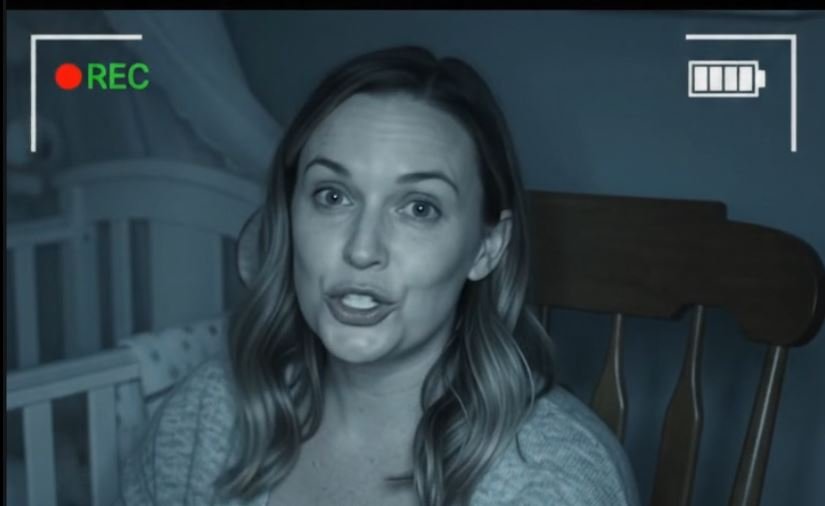
Instead, the screen showed a woman sitting in the rocking chair beside the crib.
The woman was leaning forward, her face hidden in the shadows, whispering softly to the baby. Lily was awake, reaching out her small hands toward the stranger, gurgling with delight.
Sarah didn’t wait to see more. She grabbed a heavy glass vase from her bedside table and ran across the hallway. She burst into the nursery, ready to scream, ready to fight.
The room was silent.
The rocking chair was empty.
Lily was lying in her crib, fast asleep, her breathing steady and calm. The nightlight cast a soft blue glow over the stuffed animals and the white wooden bars of the bed. There was no one else in the room. The window was locked from the inside, and the closet door was shut.
Sarah checked the baby monitor camera mounted on the wall. The small green light was glowing, indicating it was still recording.
She looked at her phone screen again.
On the live feed, the woman was still sitting in the chair.
Sarah stood in the center of the nursery, looking at the empty rocking chair with her own eyes, while the screen in her hand showed a person sitting right in front of her.
The woman on the screen stopped whispering. She slowly turned her head toward the camera.
Sarah felt the air leave her lungs.
The woman had Sarah’s face.
She was wearing the same pajamas Sarah was wearing at that very moment. She had the same messy ponytail and the same tired circles under her eyes.
On the screen, the “other” Sarah smiled. She looked directly into the lens and mouthed three words:
“You’re too late.”
Sarah dropped the vase. It shattered against the hardwood floor, but Lily didn’t even flinch. The baby remained in a deep, unnatural sleep.
Sarah lunged for the crib, intent on grabbing her daughter and running out of the apartment. But as her hands reached for the baby, they passed right through Lily’s body.
Her fingers met the soft mattress, but there was no weight, no warmth, no child.
The crib was empty.
Sarah screamed, but the sound was muffled, as if she were underwater. She looked at the baby monitor one last time.
The screen showed the room exactly as it had been a minute ago. The “other” Sarah was now standing up, picking Lily out of the crib and walking toward the door.
The door Sarah was currently standing in front of.
The “other” Sarah walked right through her.
Sarah felt a sudden, freezing chill pass through her chest. For a split second, she heard the faint smell of lavender—her mother’s perfume—and the sound of a lullaby she hadn’t heard since she was five years old.
She turned around, but the nursery was empty.
She ran back to her own bedroom. Her bed was neatly made, the vase was still on the nightstand, and the apartment was silent.
She checked the time.
2:43 a.m.
Her phone buzzed.
“Person detected.”
Sarah opened the app. The screen showed the nursery. A woman was standing in the doorway, holding a glass vase, looking terrified.
It was Sarah.
She watched herself on the screen, frozen in the doorway of the nursery.
Then she saw the woman in the rocking chair.
The woman in the chair was not Sarah.
She was an older woman, grey-haired and pale, wearing a blue floral dress. She was holding a baby, but it wasn’t Lily. It was a baby boy with bright green eyes.
The older woman looked at the Sarah on the screen and whispered, “She’s not your daughter, Sarah. She never was.”
The recording ended.
Sarah’s phone screen went black. A single message appeared in white text:
“Storage full. Deleting history from October 14, 1994.”
Sarah looked at the date on her phone.
August 26, 2026.
She walked back to the nursery. This time, the room was different. The blue nightlight was gone. The walls were painted a pale yellow. The crib was made of dark metal, not white wood.
And inside the crib was a photograph.
It was a picture of a young woman holding a baby boy. The woman was Sarah’s mother. The baby was Sarah’s brother, who had died in a house fire thirty years ago.
In the photograph, Sarah’s mother was wearing a blue floral dress.
Sarah looked at the rocking chair.
A small red ribbon lay on the seat.
She picked it up. It was damp, smelling of smoke and old lavender.
From the hallway, she heard a baby cry.
It wasn’t Lily’s cry. It was the high-pitched wail of a newborn.
Sarah followed the sound to the living room. The front door was wide open. Standing in the hallway was the “other” Sarah—the one from the first recording.
She was holding Lily.
“Who are you?” Sarah whispered.
The woman turned around. Her eyes were not black, and she didn’t look like a ghost. She looked like a woman who had just survived a nightmare.
“I’m the one who stayed,” the woman said.
“Where is my daughter?”
“She’s where she belongs. In the past.”
The woman stepped out into the corridor and the door slammed shut.
Sarah tried the handle, but it was locked. She looked through the peephole.
The hallway was empty.
She returned to the nursery and looked at the baby monitor. The green light was still on.
She played the last recorded clip.
It showed Sarah standing in the nursery, holding the red ribbon.
But in the background, reflected in the window glass, was a man Sarah had never seen before. He was standing directly behind her, holding a box of matches.
The man looked into the camera and whispered:
“2:44. Time to wake up.”
Sarah felt the smell of smoke filling the room.
She looked at the floor. The carpet was starting to turn black.
She reached for the baby monitor, but the plastic was melting.
The final notification appeared on her phone:
“Event ended. All data lost.”
Sarah woke up.
She was in her bed. The sun was shining through the curtains. Lily was crying in the nursery.
Sarah ran to the room, her heart pounding. She scooped Lily up and held her tight, breathing in the scent of baby powder and milk.
“It was just a dream,” she whispered. “Just a dream.”
She sat in the rocking chair to soothe the baby.
As she rocked back and forth, she noticed something on the floor.
A small red ribbon.
It was damp.
And it smelled of smoke.
Sarah looked at the baby monitor on the wall.
The green light was off.
But on the screen of her phone, which was lying on the floor, a new notification had just appeared:
“Person detected in Nursery. Time: 2:44 A.M.”
The date on the notification was October 14, 1994.
Sarah looked down at the baby in her arms.
The baby opened its eyes.
They were bright green.
Lily’s eyes were blue.
From the hallway, Sarah heard three slow knocks.
Tap.
Tap.
Tap.
And a woman’s voice—her own voice—whispered from the other side of the door:
“You’re early. But he’s already here.”