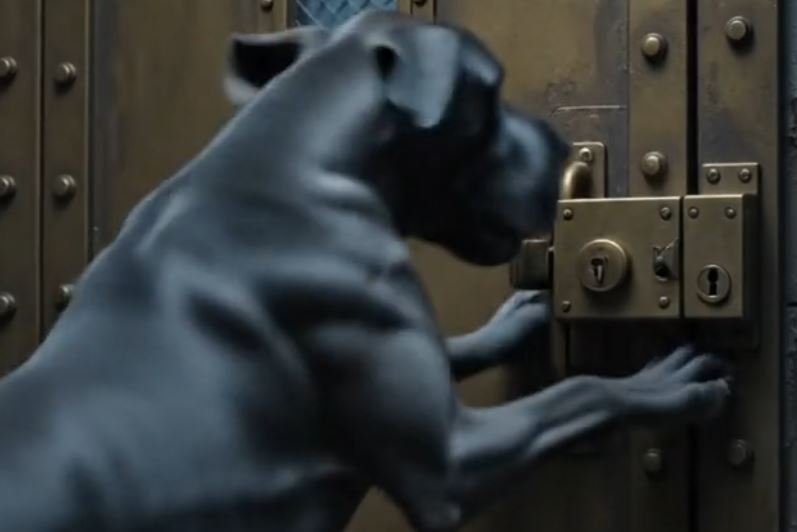
The automated solar grid of the remote Blackwood Lighthouse failed at 11:45 PM during a Category 3 coastal storm. A rogue lightning strike fried the backup computer relays, shutting down the main rotating halogen beacon just as a commercial ferry with sixty passengers was heading directly toward the jagged rocks of Dead Man’s Reef.
Trapped inside the automated lantern room at the top of the 120-foot spiral tower was Lighthouse Keeper Samuel Vance. The electrical short had triggered a high-voltage surge that welded the magnetic locking mechanism on the heavy brass access hatch shut. Worse still, the surge shattered the main lamp housing, sending heavy glass shards across the floor and filling the sealed glass dome with dense electrical ozone smoke that cut off Samuel’s oxygen supply. With the beacon dark and his radio fried by the surge, Samuel was completely helpless as he watched the distant ferry’s navigation lights blindly approach the reef.
Lying on the floor of the lower observation deck was Titan—a massive, 140-pound blue Great Dane. Titan was a retired maritime support dog whose acute hearing allowed him to detect low-frequency oceanic vibrations long before human instruments could register them.
Sensing the sudden shift in the tower’s electrical hum and hearing the distant horn of the approaching ferry, Titan bounded up the spiral iron staircase, his heavy paws echoing through the metallic shaft.
Reaching the locked brass hatch at the top, Titan didn’t try to turn a wheel or pull a handle. He recognized the smell of ozone and the sound of Samuel’s choked coughing from behind the brass door.
Understanding that the magnetic lock was held by a temporary electrical contact point on the outer frame, Titan placed his massive front paws against the reinforced brass frame. Using his immense 140-pound frame and raw muscular power, he began leaning his full body weight against the door frame in rhythmic, powerful pulses, creating violent physical vibrations designed to disrupt the fragile, fried contact relay.
On the fifth massive surge, the warped contact point snapped loose. The heavy brass hatch swung open, releasing the toxic ozone smoke and allowing fresh ocean air to surge into the lantern room.
Samuel, gasping for breath, scrambled toward the manual backup halogen flare setup. But the flare igniter was missing its mirror reflector, which had been knocked into a narrow, two-inch gap between the heavy iron floor plates during the shock.
Without hesitation, Titan wedged his long muzzle into the narrow gap, carefully hooking the curved metal reflector with his teeth and pulling it free within seconds. Samuel mounted the reflector, struck the manual flare, and sent a brilliant emergency beam slicing through the storm, causing the ferry to sheer away from the reef with only seconds to spare.
When the Coast Guard cutter docked at the island two hours later, they found Samuel sitting on the spiral stairs, his arm wrapped around Titan’s massive neck as the lighthouse beam rotated overhead.
The Coast Guard captain looked at the severed magnetic lock and the retrieved reflector in disbelief: “The automated system hard-locked this hatch… how did you break the magnetic contact and retrieve the glass bay reflector?”
Samuel stroked Titan’s head, his voice trembling: “I didn’t break it. Titan hit the frame like a battering ram until the lock snapped.”