The second call came at 9 AM.
Not from search and rescue. From a rancher, 15 miles south. Jed Calhoun, 78, retired sheriff, retired K9 handler, retired everything. He had a dog. Not a working dog — not anymore. A Belgian Malinois, 9 years old, named Scout.
Scout had been rejected.
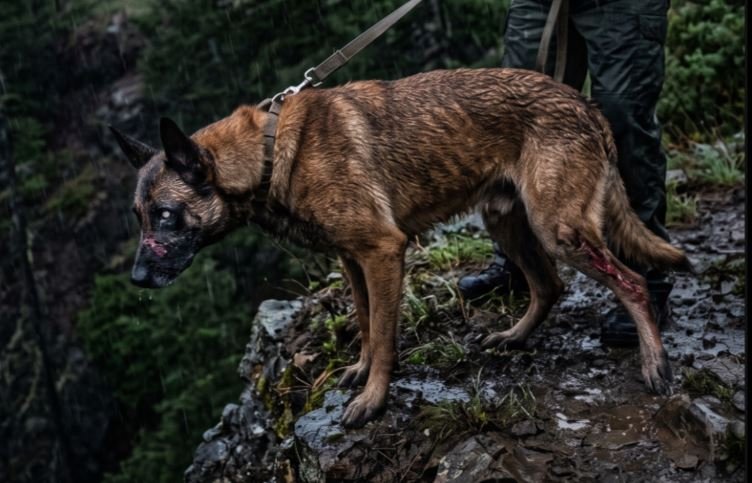
Not from the program — from retirement. Too old, they said. Cataract in one eye, limp in the left hind leg, the particular decline that working dogs face when their bodies fail but their will doesn’t. Jed had adopted him 2 years ago. Not to work. Just to live. Just to be.
But Scout had found something.
At 6 AM, before the call, before Mark even knew Jed existed. Scout had been on the porch, nose to the wind, the particular posture that Jed recognized from 30 years of working dogs — there’s something. I smell something. I need to go.
Jed had let him.
Not because he expected anything. Because Scout was old. Because the vet had said maybe a year left, maybe less. Because Jed had learned that when a working dog wants to work, you let him work, even if the work is just walking, just smelling, just being present in a world that has decided he’s done.
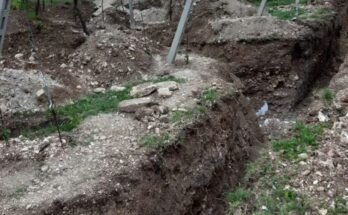
Scout had led him to a ravine.
Not far. 2 miles from Jed’s property line. 12 miles from the search grid. Outside the perimeter that search and rescue had established, that drones had covered, that thermal imaging had scanned and found nothing.
The ravine was deep.
Steep walls. Fallen trees. The particular terrain that breaks ankles, that traps children, that hides bodies. Scout had stopped at the edge. Nose down. Body rigid. The particular posture that Jed hadn’t seen in 2 years — the posture that meant found. Here. Now.
Jed had called it in.
Not to 911. To the sheriff’s office directly. To a dispatcher who knew him, who remembered him, who understood that a retired sheriff with a retired dog might still know things that the system didn’t.
Mark met them at the ravine.
Not immediately. 45 minutes. The particular delay of bureaucracy, of verification, of a system that doesn’t trust old men and rejected dogs. He arrived with Axel, with backup, with the particular machinery of official search and rescue.
Scout was still at the edge.
Not moving. Not barking. Just… present. Nose to the ravine, body vibrating with the particular intensity of a dog who has found something and is waiting for humans to catch up.
Mark let Axel scent.
From Scout. From the air. From the particular chemistry that working dogs use to communicate — I found something. Follow. Trust me. Axel, younger, faster, officially certified, deferred to Scout. The particular hierarchy of dogs that humans don’t always understand.
Axel found her.
Not in the ravine. At the bottom. 40 feet down. Curled against a tree, unconscious, hypothermic, but breathing. Emma. 6 years old. Missing for 15 hours. Found by a dog that the program had rejected, that the system had forgotten, that an old man had loved enough to let work one last time.
Part 3: The Descent
Getting Emma out was harder than finding her.
The ravine walls were steep, wet, unstable. The rain had loosened soil, created slides, turned the particular descent into a risk that rescue teams hesitated to take.
Mark went down.
Not because he was ordered. Because he was K9. Because the particular bond between handler and dog means that where the dog goes, you follow. Axel first, finding footholds, using his body to test stability, the particular courage of a creature who doesn’t understand risk, only duty.
Scout followed.
Not asked. Not commanded. Just… followed. His left hind leg dragging, his one good eye finding the path, his body moving with the particular determination of a dog who had found what he was looking for and would not leave until it was safe.
They reached Emma together.
Mark checked her — breathing, pulse, the particular assessment that paramedics do but that police are trained for. She was alive. Cold. Wet. But alive. The particular miracle of a child who had fallen 40 feet, who had curled against a tree, who had survived a night in the Montana wilderness because she was too young to know she shouldn’t.
He wrapped her in his jacket.
Called for the basket, the ropes, the particular equipment that would lift her out. Waited. Held her. Warming her with his body, with his breath, with the particular presence of a stranger who had become, in this moment, everything.
Scout lay beside them.
Not interfering. Just… present. His body pressed against Mark’s leg, against Emma’s arm, the particular warmth of a creature who had walked 2 miles on a bad leg, who had found a scent that younger noses missed, who was now doing the only thing left — being there.
The basket came.
Emma was lifted. Mark followed. Scout followed. The ascent — slower, harder, the particular exhaustion of a body that had given everything and was now running on will alone.
At the top, the medics took her.
Mark didn’t follow. He sat. On the ground. In the rain. With Scout beside him, breathing hard, the particular sound of a dog who has reached his limit and is still standing.
Jed was there.
The old man. The retired sheriff. The particular witness to a moment that he had made possible by trusting a dog that the world had rejected.
Mark looked at him. Looked at Scout. Looked at the particular combination of old man and old dog that had succeeded where the system had failed.
“How?” Mark asked.
Not why. Not what. Just… how. The particular question of a professional who has encountered something that doesn’t fit his training, his experience, his particular understanding of how the world works.
Jed shrugged.
“Scout was always the best nose in the program,” he said. “They retired him because of his leg. Because of his eye. Because they thought he couldn’t do the work anymore.” He paused. Looked at Scout, who was lying down now, finally, his body surrendering to exhaustion. “They forgot that the work isn’t about legs or eyes. It’s about want. About need. About the particular thing that makes a dog search even when there’s no reason to believe.”
Mark understood.
Not completely. But enough. The particular lesson of a rescue that shouldn’t have happened — that a rejected dog, an old man, a system that had given up, had found what the system couldn’t find.
He made a call.
Not to his supervisor. To the K9 program director. To the particular person who had signed Scout’s retirement papers, who had decided that a cataract and a limp meant done, who had never considered that the dog might still have work left in him.
“Scout’s back,” Mark said.
Not officially. Not permanently. Just… back. Reinstated. Re-certified. The particular bureaucracy of a system that acknowledges its mistakes slowly, reluctantly, but eventually.
Scout worked for one more year.
Not full-time. Not the 18-hour tracks that Axel could do. But the particular searches that required experience, that required patience, that required a nose that had learned to distinguish scent from distraction, truth from confusion.
He found 3 more missing persons.
A hiker. A hunter. A teenager who had run away and gotten lost in the particular wilderness that Montana provides. Each time, Scout led. Each time, he found. Each time, the system that had rejected him was forced to acknowledge that it had been wrong.
He died at 10.
Not on a search. In his sleep. In Jed’s house. On a bed that Jed had bought for him, that was too soft for a working dog, that Scout had accepted with the particular grace of a creature who had earned rest.
Mark was there.
Not because he was invited. Because he had become part of the story, part of the particular bond between Jed and Scout that had extended to include him, to acknowledge that some rescues create families that are not related by blood.
Jed buried him in the ravine.
Not literally. But close. On his property, where he could see the particular terrain that Scout had conquered, that had defined his last working year, that had proved what the system had refused to believe.
The marker was simple. Jed carved it himself.
SCOUT — Retired. Rejected. Redeemed.
Mark visits.
Not often. Once a year. On the anniversary of Emma’s rescue. He brings his daughter now — 8 years old, the particular age where she understands that dogs can be heroes, that old doesn’t mean done, that the world is full of creatures who are waiting for someone to believe in them.
He tells her the story.
Not the official version. The real one. About Scout. About Jed. About the particular moment when a rejected dog stood at the edge of a ravine and refused to leave until a 6-year-old girl was safe.
His daughter listens.
Not because she understands. Because she will. Because the particular stories we tell our children become the way they see the world, the way they treat the old, the rejected, the particular creatures that the system forgets.
She places a stone on Scout’s grave.
A small stone. A child’s stone. The particular offering of someone who has learned that gratitude is expressed in presence, in memory, in the particular act of remembering.
Mark places one too.
Not because Scout needs it. Because Mark does. Because the particular rescue that changed everything — Emma’s life, Scout’s legacy, Mark’s understanding of what working dogs can do — deserves to be marked, to be remembered, to be told.
They walk back to the truck.
Jed waves from the porch. Old. Alone. But not lonely. The particular contentment of a man who had a dog who mattered, who still matters, whose story will outlive them both.
Mark starts the engine.
His daughter looks out the window. At the ravine. At the particular wilderness that swallows children and gives them back, that tests the system and finds it wanting, that rewards the particular persistence of old men and rejected dogs.
“Dad?” she says.
“Yeah?”
“Can we get a dog?”
Mark smiles. The particular smile of a man who knows that the answer is yes, that it has always been yes, that some questions are just waiting for the right moment to be asked.
“Yeah,” he says. “We can get a dog.”
Not to replace Scout. Not to be Scout. Just to be. To search. To find. To be the particular creature that makes a family complete, that teaches children about loyalty, that proves — again and again, in every generation — that the best things in life are the ones that find us when we’re not looking.
They drive away.
The ravine fades. The marker fades. But the story remains. In Mark’s telling. In his daughter’s memory. In the particular way that rescue creates ripples — small at first, then larger, then waves that change everything they touch.
Scout’s story is still being told.
Not by Jed. Not by Mark. By the K9 program that now considers age differently, that looks at rejection differently, that understands — finally, slowly, imperfectly — that a dog’s worth is not in his body but in his will.
By Emma, who is 16 now, who wants to be a veterinarian, who volunteers at shelters and looks for the old dogs, the rejected dogs, the particular creatures that everyone else has forgotten.
By the system that failed her and saved her, that rejected Scout and redeemed him, that continues — despite everything — to learn, to grow, to become better than it was.
And by the wind.
The particular wind that blows through Montana ravines, that carries scent and memory and the particular stories of dogs who found what was lost. If you listen — really listen — you can hear it.
Not words. Just… presence. Just the particular sound of a dog who is still working, still searching, still finding.
Scout.
Retired. Rejected. Redeemed.
Forever.