Chapter 1: The Glass That Never Reached Him
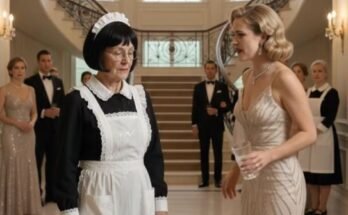
For one long second, nobody in Luca Moretti’s dining room seemed to understand the question.
Why does the woman I’m about to marry have custody papers for the daughter I buried six years ago?
The chandeliers kept shining. The string quartet played the final notes of a waltz. Twenty-eight guests sat motionless before plates of untouched sea bass, while Vanessa Bellini gripped the back of her chair so tightly that her knuckles turned white.
I wanted to stay standing. I wanted to hear her answer. But the marble floor tilted beneath my feet, and the silverware began to sound as though it were ringing from the bottom of a well.
“Olivia?” Luca said.
The last thing I saw clearly was his face changing. Not into the anger people feared, but into the terrified expression of a man who realized he was about to lose another person before he had saved the first.
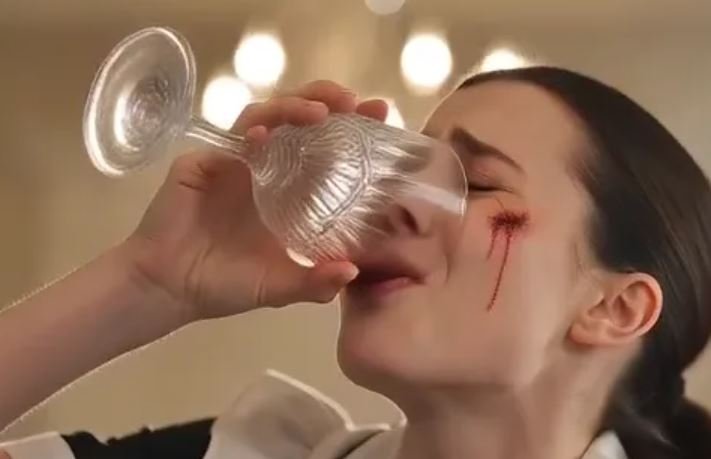
He caught me before my head struck the floor. “Call an ambulance,” he said. “Now. Tell them she drank something suspicious. Save the glass and the bottle.”
A woman screamed. Someone pushed back a chair. I tried to tell him about the small container beside the wine, but my tongue felt heavy and my words tangled together.
“Don’t let them move Bella,” I whispered.
“Who is Bella?” he asked, holding my head carefully against his arm.
“The little girl. They call her Bella.”
I didn’t know where the name came from. Perhaps I had glimpsed it on a line of the investigator’s report. Perhaps my frightened mind was putting pieces together. I couldn’t tell.
“Stay with me,” he said. “Olivia, look at me.”
“I didn’t want you to drink it.”
“I know. And you’re going to tell me everything when you’re safe.”
His voice followed me into darkness.
I woke beneath fluorescent lights, with a pulse monitor making small, stubborn beeps beside my bed. My chest hurt beneath fresh bandages. A physician with silver-rimmed glasses introduced herself as Dr. Evelyn Brooks and explained that the emergency team had treated me for an unknown substance while laboratory testing was underway.
She refused to guess at the contents of the wine.
“You’re lucky you got medical attention quickly,” she said. “But I don’t want you confusing luck with safety. Drinking something you suspect is dangerous can kill you.”
“I know.” My throat was raw. “Is Mr. Moretti all right?”
“He wasn’t the patient.”
“Is the little girl all right?”
The doctor glanced toward the door. “A detective would like to speak with you when you feel able. For now, you need rest.”
My eyes stung. “Please. Someone was going to move her tonight.”
“Then I’ll tell the detective that part is urgent.”
She left, and I stared at the ceiling while the events replayed in ugly fragments. Vanessa’s polished nails against the wine bottle. The photograph in my apron. The sharp pain from the glass cabinet. Luca’s eyes when he read his daughter’s name.
I had spent almost a year learning the rhythms of the Moretti house. How to polish the black walnut banister without dulling its finish. Which cup Luca preferred for his early espresso. How every February he ordered white roses for a room nobody entered.
I knew when to be invisible. That had been the rule that paid my mother’s bills.
But once I’d seen Isabella’s face, invisibility had become impossible.
The door opened. Luca stepped in wearing the same black suit, now missing its tie. His dark hair was disordered, as if he’d been running his hands through it for hours. Behind him stood Marco Santoro, his head of security, and a woman in a plain gray coat.
“Detective Naomi Reyes,” the woman said, showing her badge. “I’m with Chicago police. May we ask you a few questions?”
I nodded.
Luca remained beside the door until Reyes asked whether I was comfortable with him staying. I said yes.
“Start with the photograph,” she said.
I described the upstairs sitting room, the report, and the photograph labeled ISABELLA MORETTI — SEPTEMBER 2026. I told her Vanessa said she’d known about the child for eight months. I described the small container and the note beside the wine, careful to distinguish what I saw from what I assumed.
“Did you see anyone put anything into the glass?” Reyes asked.
“No. I saw the container near the bottle. I thought the wine might hurt him. I took it.”
“Don’t do that again,” Luca said quietly.
I turned toward him. He wasn’t scolding me. His hands were shaking.
“I should have shouted for security,” I admitted.
“You shouted,” he said. “We heard you.”
Reyes wrote another note. “Who handled the bottle after you collapsed?”
“Marco secured it,” Luca replied. “No one touched it after that. We handed it to the responding officers.”
“And Vanessa?”
“She’s at the house with two officers. She has counsel on the way.”
It would have been easier if Vanessa had run. But I’d seen her face when Luca held up the photograph. She looked like someone who believed every person in the room could be bought, and she was calculating the price.
Reyes placed a copy of the investigator’s report on my blanket. “Is this what you saw?”
The cover bore the name HARTWELL INQUIRIES. Beneath it was a recent photograph of the little girl, standing outside a school with a pink backpack. She was smiling at someone beyond the camera.
“Yes,” I whispered. “That’s her.”
“Your account matters. So does what we can independently verify.” Reyes pointed to the last page. “The report includes a transfer from a residence in Lake Forest to a second address outside the city. The arrangement is supposed to happen tonight.”
“Did you find her?” Luca asked.
“Officers have gone to both addresses. We don’t have confirmation yet.”
A muscle jumped in his jaw. “She is six years old.”
“I understand. We’re coordinating with child welfare authorities. We can’t simply remove a child based on a photograph and a disputed name.”
Luca closed his eyes. The restraint seemed to cost him more than anger would have.
“I will give you every document I have,” he said. “Whatever you need.”
Marco’s phone buzzed. He glanced at the screen, stepped into the hall, and returned after a minute. “The Lake Forest address is empty,” he said. “There are fresh tire marks by the garage. An employee saw a dark van leave less than an hour ago.”
Luca looked toward Reyes. “You said your officers were on the way.”
“They were. They arrived to find the house empty.” She was already reaching for her radio. “We’re working on the vehicle now.”
My heart hammered. “The little girl might be scared. She thinks someone is taking her to a new school.”
Reyes looked at me sharply. “How do you know that?”
I closed my eyes and searched the memory of the report. “There was a note under a photograph. It said, ‘Tell Bella this is for school registration.’ I remember because it was typed in red.”
Marco leaned toward Luca. “We have to check the private airfield.”
“Give that information to the detective,” Luca said. “Don’t get in their way.”
The expression on Marco’s face suggested he expected a different order. So did mine. Luca Moretti commanded armed men. He could close a nightclub with one phone call. But the father standing beside my hospital bed was trying, desperately, not to turn his daughter’s rescue into another thing she might need rescuing from.
Reyes stepped outside to make calls. Luca pulled a chair next to my bed.
“I owe you an apology,” he said.
“You didn’t hurt me.”
“Someone did it inside my home. Someone I put in a position to give you orders.” He looked toward the bandage near my collarbone. His voice tightened. “And I didn’t notice you were afraid of her.”
I thought about the threats to my mother, the schedules Vanessa changed without explanation, the way I had learned to keep my eyes on the floor whenever she entered a room.
“She was very good at making fear seem normal,” I said.
He nodded once. “It shouldn’t have been normal.”
“Did you really believe Isabella died?”
He looked at the window. Beyond it, Chicago’s late-night skyline stood in sharp silver lines against the dark.
“I held her once,” he said. “She was wrapped in a yellow blanket. She had tiny fingers, and she kept trying to open her eyes. The doctor said she needed observation after the birth. My wife, Elena, was unconscious after complications. Then Elena died. Three days later, they told me Isabella had gone too.”
He stopped. I waited.
“I buried a closed casket because they told me I couldn’t see her again.” His face barely moved, but his voice broke. “I believed the people who had been with my family for decades.”
“Who told you?”
“Dr. Julian Mercer. And Vincent Bardi, my father’s oldest adviser.”
I recognized Vincent’s name. In the mansion, his instructions were treated almost as seriously as Luca’s. He had also been the one who insisted Vanessa would be an excellent wife. The thought made my stomach twist.
“Was Vincent at dinner?” I asked.
“Yes.”
“Did he leave before I collapsed?”
Luca looked up sharply. “I don’t know.”
A knock interrupted us. Reyes returned, her expression grave.
“We located the van on traffic cameras,” she said. “It went north. We have an officer speaking with the driver of a vehicle that matches it at a service station.”
“Is she inside?” Luca asked.
“We don’t know yet.” Reyes took a breath. “There’s something else. The man listed as the child’s temporary custodian signed the transport order as Vincent Bardi.”
The room seemed to narrow. Luca stood so quickly his chair scraped the floor. Vincent had helped him bury his daughter. Now his name was on the papers being used to move her.
I saw Luca reach for his phone and stop himself. Then he turned to the detective.
“Tell me exactly what you need from me,” he said, “to bring my daughter home without putting her in danger.”
And for the first time since I had taken the wine glass from his hand, I believed we might reach her before the people who had stolen six years managed to steal one more night.
Chapter 2: The Girl in the Yellow Coat
The highway north of Chicago ran through a curtain of October rain. I knew because Detective Reyes showed me a traffic-camera still on her phone at four the next morning. The picture was blurred, but I could see a dark van with one rear taillight brighter than the other.
“Isabella was in there?” I asked.
“We’re still confirming who was in the vehicle. I wanted to ask whether you recognize the driver.”
A man’s pale profile showed through the windshield. He wore a baseball cap and a dark jacket. I couldn’t make out his face. “No. I’m sorry.”
“Don’t apologize for what you can’t see.”
By then, the laboratory had detected a potentially dangerous sedating substance in my system, although the medical team was waiting for more detailed confirmation. Dr. Brooks was keeping me for observation. My bandaged chest throbbed every time I moved.
My mother had called six times before I found enough courage to answer.
“Tell me you’re okay,” she demanded.
“I’m in the hospital, Mom. But they’re taking care of me.”
“Olivia, what happened?”
I looked across the room at the empty chair where Luca had sat for half the night. “Something complicated at work.”
“I raised you to be careful, not to pretend you don’t need help.”
Her words made me want to cry more than the pain did. “I know.”
“Then let people help you.”
I promised I would and hung up just before Luca returned with two paper cups of coffee. He looked exhausted. Beneath his expensive coat, he wore the same wrinkled shirt he’d had on at dinner.
“Reyes found a lead,” he said. “The van belongs to a transport company. It had been rented through a law office that does private family placements.”
“Is that even legal?”
“Some family placement services are legal. Forged orders and abductions aren’t. They’re sorting out which documents are real.”
He put the coffee on the tray without offering me any. “Doctor says you’re not supposed to have caffeine yet.”
“Then why bring two?”
“One is for your nurse. I’m trying to make her stop calling me the man who doesn’t know how to sit down.”
I laughed despite myself. It hurt. He winced in sympathy.
“I’m sorry,” he said. “For once, that was funny.”
His smile faded when his phone rang. He listened without speaking, then turned away from the bed. I caught only a few words: registration, emergency order, and the name Marisol Vega.
After he hung up, he sat down slowly.
“The child has been living as Bella Vega,” he said. “The address in Lake Forest was apparently a temporary stop. She lived for years with a woman named Marisol Vega in Wisconsin.”
“Was Marisol involved?”
“We don’t know. She’s missing along with Isabella.” He rubbed his forehead. “Marisol may believe Bella was legally placed with her. The investigators want to speak with her before they make assumptions.”
I remembered the pink backpack in the photograph, the small hand holding a paper star. Whoever Bella believed her family was, having strangers tear that away would only make the harm worse.
“Tell them she needs to see a familiar face,” I said. “Even if Marisol isn’t her mother.”
Luca nodded. “I told them.”
At sunrise, a uniformed officer accompanied Detective Reyes to my hospital room. They’d found the transport driver outside a gas station near Kenosha, but Bella and Marisol weren’t in the vehicle. The driver said he’d been told to collect luggage, not a child. He gave police the address of a cottage used for overnight stays.
“The cottage is empty too,” Reyes said. “But we found a child’s yellow raincoat and a page from a coloring book.”
She placed a photograph of the page on the bed. A crooked blue bird hovered over a house. Underneath, in careful letters, someone had written: BELLA AND MARI.
My eyes filled. “She draws birds.”
“Does that mean something to you?”
“No. It’s just… she’s a child. Everyone’s talking about petitions and trust documents. She draws birds.”
Luca ran a thumb along the edge of the photograph without touching the image.
Reyes said, “We’re widening the search. In the meantime, Mr. Moretti, we need your cooperation in securing records at the mansion. Nobody on your staff should access the upstairs study or Vanessa’s office until our team has documented them.”
“It’s yours,” he said. “Your lawyer can be present.”
“He will be.”
I glanced at him. “What about Vincent?”
Luca’s mouth flattened. “He’s stopped answering calls.”
The silence that followed felt heavier than fear. Vincent had supervised Luca’s father’s funeral, advised Luca through his wife’s illness, and held a place at almost every holiday table. If he had hidden Isabella, then Luca’s entire history had been built around a lie.
A few hours later, I was cleared to go home with follow-up instructions and warnings about dizziness. Marco arrived with a plain gray coat to cover my torn uniform. I expected him to take me to my apartment. Instead, a woman with kind eyes stepped out of the hospital lobby and introduced herself as Vivian Cole, a victim-support advocate arranged through the detective.
“You have choices,” Vivian said. “You can stay somewhere private, have a friend pick you up, or go home. We can also help you file for workplace-related support and arrange safety planning.”
“Am I in danger?” I asked.
“We can’t promise you’re not. The people you identified have access to money and information. I don’t want you alone with that uncertainty.”
I considered my small apartment and the unlocked mailbox downstairs. Vanessa knew my address. She had once mentioned my mother’s clinic without being told which one it was.
“I want to see my mom,” I said.
“Then we’ll work out the safest way.”
Luca didn’t interfere. He offered to pay my medical expenses and lost wages, but when I hesitated, he said, “Your lawyer or advocate can review anything first. I don’t want you feeling you owe me.”
That mattered more than he knew.
In the afternoon, Vivian brought me to my mother’s apartment after a patrol car checked the street. Mom was waiting in her blue cardigan, her oxygen machine humming beside the couch. She took one look at my bandages and pressed a trembling hand over her mouth.
“Sweetheart.”
I sat beside her. For the first time since the engagement dinner, I let someone hold me while I cried.
I told her most of the truth. Not every frightening detail, but enough to make her understand why the police might call. She listened without interrupting and finally said, “You’re done working in that house.”
“I may have to give a statement first.”
“Give the statement. Don’t go back to being their maid.”
I looked at the overdue medical bill lying on the end table. “What about this?”
“We’ll find another way.”
She was tired and frightened, yet she said it with the same certainty she’d used when I was seven and afraid of thunderstorms.
A sharp knock sounded at the door. My heart jumped until Vivian, who had stayed in the hallway, identified herself.
“There is a visitor from the detective’s office,” she called. “A social worker.”
The social worker, Leah Moreno, had been assigned to assist with Isabella’s situation. She asked whether I knew anything about the girl’s habits, any song, nickname, or comfort item that might help if police located her frightened and alone. I mentioned the blue birds and the yellow raincoat. Leah thanked me.
Then she showed me a photograph taken that morning from a security camera outside a pharmacy in a town near the state line. A woman in a gray sweater held the hand of a little girl in a yellow coat. The girl’s face was turned away, but her braid was visible.
“Could that be Marisol?” I asked.
“We think so.”
The adult wasn’t pulling the child. She was kneeling beside her, listening as the girl pointed toward something out of frame.
“She doesn’t look like she’s running away from Bella,” I said. “She looks like she’s protecting her.”
“That’s our working possibility,” Leah replied. “Marisol called a legal-aid hotline last night. She said a man threatened to take Bella away unless she signed papers. Then the call dropped.”
Luca had spent six years thinking his daughter dead. Marisol had spent six years raising a child she loved. It was possible that both of them had been cheated by the same people.
After Leah left, a message came to Vivian’s phone. She read it twice and asked me to sit down.
“Police found Marisol’s car,” she said. “It was abandoned in a shopping center parking lot. There’s no sign of Bella.”
My stomach dropped. “Was there blood?”
“None reported. They did find something tucked beneath the driver’s seat.”
Vivian showed me the evidence photograph. It was a folded sheet of yellow paper with the same blue bird I’d seen on Bella’s coloring page. In the corner, an adult had written four words:
ASK ABOUT THE NURSERY.
I thought of the tiny white dress Luca kept locked away, the grief-filled room nobody entered, and the doctor who had signed Isabella’s death certificate.
Someone wasn’t merely hiding a child. Someone had left a trail leading back to the room where the lie began.
Chapter 3: The Room With the White Roses
The first time I entered the Moretti nursery, I wasn’t carrying a cleaning cart. I was carrying a recorder provided by Detective Reyes, and a knot of fear sat just beneath my bandages.
It was two days after the engagement dinner. My physician had cleared me for limited activity, and Reyes had asked whether I could identify the room described on the note. Vivian accompanied me, along with a police technician. Luca waited at the foot of the stairs, refusing to let anyone pressure me to participate.
“If this is too much, Olivia, turn around,” he said.
“I want to help.”
“Helping doesn’t mean you have to suffer through everything.”
“I know. I’ll tell you if I need to stop.”
The mansion looked different without a party. Someone had removed the ivory roses from the dining table, leaving dark rings where the vases had stood. The crystal glasses were gone. The grand piano sat closed, reflecting the gray afternoon sky.
I remembered rushing across the same floor, a wineglass clenched in my shaking hand. I kept my eyes ahead until we reached the corridor behind Luca’s study.
The nursery door was painted a soft cream. A small brass nameplate had been turned toward the wall. When Luca unlocked it, the familiar scent of cedar and old linens drifted toward us.
Inside stood a white crib, a rocking chair, and shelves of picture books arranged by size. Clouds had been painted on the ceiling. A mobile of silver stars hung motionless above the crib. On the windowsill, six dried rose stems rested in separate narrow vases.
Luca touched the back of the rocking chair. “Elena picked everything,” he said. “She made me paint those clouds three times because she said the first two versions looked like potatoes.”
The hint of a smile vanished. “I hadn’t come in here for months.”
Reyes walked slowly around the room. “What do you know about the staff who handled this room after the birth?”
“Vincent supervised the household when I was at the hospital. Dr. Mercer signed the hospital documents. My aunt Teresa arranged the memorial.”
“And the housekeeper?”
“Mrs. Larkin retired that year. She died last winter.”
I moved toward the bookcase. On its lowest shelf sat a wooden box painted with blue birds. My breath caught.
“There,” I said.
The technician photographed it before opening it. Inside were folded paper cranes, ribbons, a baby bracelet with the name ISABELLA, and a handwritten list of lullabies. Beneath the papers lay an envelope addressed to E. MORETTI in a woman’s sloping handwriting.
Luca made a sound I couldn’t identify. “Elena’s writing,” he whispered.
Reyes asked if he wanted to step outside. He shook his head.
The technician carefully unfolded the letter and photographed it before handing a copy to Luca.
My dearest Isabella, it began. If someday you ask why your mother chose a room full of birds, it’s because birds always find a way home, even after storms change the sky.
Luca sat on the rocking chair. He read the rest silently, shoulders bent, while the clock on the mantel ticked through the long pause.
“It’s a letter for her birthday,” he said finally. “Elena wrote it before the delivery. It isn’t evidence of what happened afterward.”
“But it matters,” I said.
He looked up. “Yes. It matters.”
The technician found a second envelope under the lining of the wooden box. This one contained photographs of hospital staff posing with a newborn in a yellow blanket. An unfamiliar woman stood nearest the incubator, wearing a nurse’s badge. On the back of the picture someone had written JUNE, NIGHT SHIFT.
Reyes photographed the badge. “June who?”
“June Ainsley,” Luca said after a moment. “Elena liked her. She kept talking to our daughter even when the baby was asleep.”
He looked toward the closed door. “Vincent told me June had taken a job out west.”
Reyes stepped aside to make a call. I remained by the window, studying the branches of a maple tree scraping against the glass. Six years of fear and silence had settled over this room like dust. Yet Elena’s letter had been here the entire time, waiting for a daughter who had never needed a grave.
The detective returned with a surprising fact. June Ainsley had never moved west. She had been living forty minutes away, and she had contacted a state investigator several years earlier about irregular infant discharge records at the private hospital where Isabella was born. Her complaint had been closed as unsubstantiated.
“Can we talk to her?” Luca asked.
“Not until we arrange it safely. She’s agreed to an interview.”
At the house, Marco was waiting in the kitchen with news. Vincent’s office had been emptied overnight. His assistant claimed he’d left for a business conference, but his passport was still in his desk. Vanessa had retained counsel and was refusing to explain why she commissioned Hartwell Inquiries.
“There are more documents,” Marco said. “A draft petition claiming Isabella’s father is legally unavailable to care for her.”
“Unavailable?” Luca repeated.
“It says you’re a danger because of alleged criminal associations. It also says the woman raising Bella has no standing to object.”
Luca looked furious, but he asked for the documents to be copied to Reyes rather than handled privately. I watched the decision land on Marco’s face. He had served Luca’s family since his twenties; he was used to making problems disappear. Now his boss was insisting everything be seen.
“Someone wanted the custody fight to be ugly,” I said.
Luca turned to me. “They were counting on my reputation.”
It was true. A judge presented with a wealthy, feared father and a carefully edited packet of allegations might hesitate. Vanessa and Vincent hadn’t merely hidden a child. They had prepared a story in which returning Isabella to her father would look like a mistake.
Before leaving, I asked Luca one question I’d been carrying since the hospital. “Why did Vanessa want to marry you if she knew Isabella was alive?”
He was silent long enough that I thought he wouldn’t answer.
“My father set up a trust,” he said. “A large part of our legitimate real estate company sits in it. If I died without a living child, those shares would pass to a charitable foundation. If I had a living child, they would belong to her.”
“Then somebody who knew Isabella was alive knew the shares were hers.”
“Yes.”
“And somebody acting as her guardian might try to control them.”
“Not automatically. A court would oversee any legitimate guardianship and trust management. But someone willing to forge records might try to bypass that oversight.”
I pictured the photograph of Isabella outside her school. Vanessa had watched that child for eight months and thought of ownership.
Before I went downstairs, Luca stopped beside a framed photograph on the hallway table. It showed Elena sitting in a sunlit garden, one hand resting on her stomach. Her smile was broad and unguarded, and there was a splash of blue paint on the cuff of her blouse.
“She wouldn’t have wanted revenge to become Isabella’s inheritance,” he said. “She always thought I spent too much time winning arguments and not enough time listening.”
I studied the photograph. “What did she do when you made her angry?”
“She made me explain myself without interrupting. Sometimes she made me write it down.”
“Sounds effective.”
“It was devastating.” He almost smiled. “I couldn’t intimidate a piece of paper.”
He set the frame down carefully. “Everyone is afraid that when I find Vincent, I will do what people expect of me.”
“Will you?”
“I don’t know what I’ll feel. I do know Isabella deserves a father who can sit beside her at breakfast, not one who leaves her to visit him through prison glass.”
I had no easy answer. Powerful men in movies made declarations and called them promises. Luca looked at the framed photograph instead of at me, as though he was trying to make a decision that would survive his anger.
I thought about my mother waiting for me at home. For both of us, showing up tomorrow mattered more than being frightening today.
“Then keep choosing tomorrow,” I said.
He nodded once. “I intend to.”
At dusk I met Vivian outside the mansion. The autumn wind whipped cold rain against the stone gate. My phone buzzed with an unknown number.
A woman spoke before I could answer. “Are you Olivia Hayes?”
“Yes. Who is this?”
“June Ainsley. I was Isabella’s nurse.”
My pulse quickened. “The police said they’d speak to you.”
“They are. But I need you to understand why the police couldn’t find the child six years ago.”
I gripped the phone. “Tell me.”
“Because she wasn’t listed as Isabella when she left the hospital. Somebody changed her identity while her father was arranging his wife’s funeral.”
A bus hissed past on the wet street beyond the gates. “Who changed it?” I whispered.
June hesitated. “I never saw the person give the order. But I saw who picked the baby up. And the man signed the discharge log with a name that wasn’t his.”
“Whose name?”
“Vincent Bardi.”
I looked back toward the mansion, where Luca stood under the portico speaking with Detective Reyes. June’s voice trembled.
“Olivia, he wasn’t alone. A woman carried the yellow blanket. She said she was taking the baby somewhere safe.”
“Do you know who she was?”
“Yes,” June said. “It was Luca’s aunt Teresa.”
The woman who had arranged Isabella’s funeral had carried her out of the hospital alive. And somewhere beyond the gates, Teresa Moretti was still playing the part of a grieving aunt.
Chapter 4: A Woman Who Knew the Way Home
Teresa Moretti arrived at the mansion the next morning carrying a tray of homemade almond cookies. I was sitting in the library with Vivian and Detective Reyes when I saw her through the doorway. She wore a camel-colored coat and pearls, and she kissed Luca’s cheek before asking whether the servants could make her tea.
It was the same gentle performance she’d given at every family gathering.
“Darling,” she said, “you look terrible. You should rest.”
Luca didn’t move to take the tray. “Where is Isabella?” he asked.
The smile held for a second too long. “You know I don’t like it when you torture yourself with—”
“She’s alive, Teresa.”
The cookies rattled against the porcelain plate. Reyes stepped into the hall.
“Mrs. Moretti, I would like to speak with you about the infant discharge records from St. Catherine’s Hospital.”
Teresa stared at her badge. “I haven’t done anything wrong.”
“Then this is your opportunity to give us an accurate account.”
Teresa refused to answer further without her attorney. Reyes didn’t argue. She merely asked her to remain available for formal questioning and warned her against interfering with the investigation. Teresa left her cookies on a side table and walked out without touching her tea.
I watched Luca through the library window as his aunt climbed into a silver sedan.
“She looked at you like you were a stranger,” I said.
“Maybe she thinks I am. For six years she’s watched me grieve a child she knew was alive.”
He sat in his father’s leather armchair and pressed two fingers to his forehead. “Every birthday she brought flowers. Every Christmas she told me Elena would want me to be happy.”
I wanted to say something that would make him feel better. There was nothing honest to say.
An hour later, June Ainsley arrived for a recorded interview. She was a small woman in her sixties with close-cropped gray hair and a canvas bag clutched against her chest. When she saw Luca, her eyes filled with tears.
“I tried,” she said. “I need you to know I tried.”
Reyes made sure everyone understood the interview was being recorded. June explained how a doctor had suddenly changed newborn Isabella’s discharge status. The infant, previously recovering well, was listed as deceased on one system. On another, a female infant with no family details appeared under a temporary identification number.
“I challenged it,” June said. “Dr. Mercer told me the family had requested privacy and that I should leave it alone.”
“Did you see a baby leave?” Reyes asked.
“Yes. Mrs. Teresa Moretti carried her through the private elevator with a man I recognized from visiting the family. He signed a visitor sheet as Vincent Hale. But his badge from a previous visit said Vincent Bardi.”
“Why didn’t you stop them?” Luca asked. There was pain in the question, not accusation.
“Because the discharge order had the doctor’s signature, and I thought your family had consented. Then I saw the death certificate. By the time I realized both records couldn’t be true, they’d threatened my nursing license.”
June opened her canvas bag. Inside was a small notebook sealed in a plastic sleeve. “I wrote down what I saw that night. I made a complaint. The hospital told the investigator I was confused.”
Reyes documented the notebook’s history and arranged to collect it properly.
I glanced toward Luca. He had covered his mouth with his hand.
“Can you remember the blanket?” he asked.
“Yellow,” June replied. “Little white ducks in one corner.”
Luca closed his eyes. “Elena chose it.”
The room grew quiet. June reached across the table but stopped before touching his hand. “I’m sorry, Mr. Moretti.”
“Help us tell the truth now,” he said.
By afternoon the case had moved beyond our little circle. Investigators obtained additional hospital records, and child welfare officials continued searching for Bella and Marisol. A family-law attorney named Rachel Chen joined Luca’s legal team, along with an independent child advocate who was concerned with Bella’s safety rather than anyone’s fortune.
Rachel met us in the breakfast room, where the sunlight fell across a table that had once seated twenty people.
“We have to approach this carefully,” she told Luca. “The records indicate you may be Isabella’s father. We will seek proper confirmation. But Bella has lived with Marisol for years. There needs to be a safe, child-centered transition, not a dramatic extraction.”
“I don’t want to frighten her,” he said.
“Then resist anyone who promises a shortcut.”
He nodded.
Rachel turned toward me. “Olivia, your witness statement may be important in the assault case and the investigation into Vanessa’s records. You should have independent advice about your own employment and injury claims.”
“I already have Vivian,” I said.
“Good. Keep her.”
The talk of lawyers and records ended when Marco hurried in, holding a phone.
“Police made contact with Marisol Vega.”
Luca stood. “Where?”
“She called from a church office near Rockford. She’s safe. Bella is with her.”
For a moment, Luca forgot how to speak.
“Can I talk to her?” he whispered.
“Not directly yet. The detective is verifying identities. They want a social worker present. Marisol says she’s terrified of Vincent and she won’t allow anyone to take Bella without explaining what’s happening.”
“She’s right,” Rachel said immediately. “The girl needs that protection.”
Luca let out a long, unsteady breath. “Tell them I’ll cooperate.”
I stepped into the kitchen to give him a moment. Through the window I could see the gardener gathering fallen leaves beside the fountain. A normal day continued outside while a six-year-old child’s life was about to change beyond recognition.
My phone rang. It was my mother.
“Are you eating?” she asked.
I looked at the untouched sandwich Vivian had made me. “Not much.”
“You need food to heal.”
“You sound like my doctor.”
“Your doctor sounds like a sensible person.”
I smiled, then winced at the pull near my stitches. Mom heard it in my voice.
“You don’t have to fix this whole family, Olivia.”
“I know.”
“Then remember your own life is part of what matters.”
When I returned to the breakfast room, Luca was still seated at the table. He looked up.
“They may let me see her tomorrow,” he said. “In a supervised place. They need to explain who I am.”
“Are you scared?”
“More than I have ever been.”
“What will you say?”
“I don’t know.” He managed a faint smile. “I think I can negotiate a hundred-million-dollar contract without notes, but I can’t figure out how to say hello to my daughter.”
“You start by asking if she’s comfortable. Then you listen.”
He studied me. “That’s what Elena would have said.”
“Then she knew something useful.”
That evening, Reyes called with a warning. Marisol had given a preliminary statement. She had been told Isabella’s father died before she was born and that her mother had left written consent for a private guardianship. She never received a genuine adoption decree, only letters from a law office arranging living expenses.
“She didn’t know who Luca was?” I asked.
“Not until someone showed her a photograph eight months ago,” Reyes said. “And that person was Vanessa.”
Luca gripped the back of a chair. “Vanessa told her?”
“Yes. Vanessa said a dangerous man might come claiming Bella. She offered to obtain a court order that would keep the child away from him.”
“From me,” he said.
Reyes continued. “Marisol says she began questioning that story when Vanessa demanded she sign the child over. Marisol contacted legal aid, and Vincent started threatening her.”
“Will Bella be safe tonight?” Luca asked.
“She’s with Marisol and trained child-protection staff in a secure location. We aren’t disclosing it, even to you, until the threat is assessed.”
Luca looked wounded by the boundary. Then he nodded. “All right.”
I thought of how much had been stolen from him. Still, I was grateful he hadn’t asked anyone to bend that rule.
While Luca spoke with his attorney, I found Marco standing alone in the pantry. He was staring at an old staff photograph pinned above the calendar. It showed Vincent laughing with a much younger Luca at a summer picnic.
“Did you know?” I asked.
Marco shook his head so sharply that I believed him. “Vincent hired me. He taught me where to stand at the front gate and which roads to check before a family trip. I thought he was the safest man in this house.”
“Maybe that was why he was dangerous.”
Marco put the photograph facedown. “A person can wear trust like a uniform.”
I looked at my bandaged collarbone and remembered how Vanessa’s title had protected her. A fiancée was considered family; a maid was considered replaceable. Neither assumption had anything to do with what we were willing to do for a child.
“Will you tell the detective everything?” I asked.
“Yes. Including the times I let Vincent send away guards without asking why.” He swallowed. “I cannot undo those mistakes. But I can stop calling them loyalty.”
The quiet conviction in his voice reminded me that Luca was not the only person being asked to choose a different kind of courage. Around us, the mansion was full of people trying to decide whether telling the truth would cost them the lives they’d built.
Just before bedtime, Rachel called again. The child’s advocate had received permission to share a message Bella had offered for the man they were telling her might be her father.
It wasn’t a letter about money or blood or the name Moretti.
It was a question written in large uneven pencil letters:
DOES HE KNOW HOW TO MAKE PANCAKES SHAPED LIKE STARS?
Luca stared at the screen for a long time. Then he looked toward the empty kitchen and said, with absolute seriousness, “Somebody find me a frying pan.”
Chapter 5: Five Minutes With a Stranger
On the morning Luca Moretti met his daughter, he wore a navy sweater instead of a suit. He had asked me the night before whether a tie would seem frightening. I told him six-year-olds were more likely to notice a person’s shoes than the price of their jacket.
He arrived at the family services building in clean sneakers, carrying a paper bag filled with star-shaped pancakes that had come out mostly like crooked flowers.
I wasn’t supposed to be part of the meeting. I was there because I had an appointment with Detective Reyes in the same building to clarify my witness statement. Vivian sat beside me in the waiting area, reviewing the notes of my hospital treatment while a radiator clicked beneath the window.
“Remember,” she said, “you are allowed to say you don’t recall something.”
“I know.”
“You don’t need to make your story sound stronger than it is.”
“I know that too.”
“Then why do you look like you’re preparing for a trial?”
“Because everyone keeps looking at me as though I started all this.”
Vivian lowered the folder. “You didn’t start it. You discovered it.”
Across the lobby Luca stood beside Rachel Chen, staring at the bag in his hands. It struck me that I had never seen him stand so still. Usually he moved like a man who expected every door to open before he reached it. Now he was waiting for permission to enter a room.
A social worker came for him. Before he followed her, he looked back at me.
“Star pancakes?” he asked.
I gave him a thumbs-up. “A masterpiece of breakfast engineering.”
The smile he managed was small but real.
I spent the next hour describing the upstairs sitting room, Vanessa’s assault, and the handwritten note near the wine. Detective Reyes didn’t try to turn my suspicions into facts. She made me walk her through the exact distance between the desk and the cabinet, where the light fell, and why I believed the bottle I saw upstairs was the same bottle served at dinner.
“Do you know whether Vanessa poured anything into the wine?” she asked again.
“No. I only know what I saw beside it.”
“Good. Keep those details separate.”
I asked if they’d identified the substance. She said the toxicology report was being handled by specialists, and she couldn’t discuss every finding. What mattered for my statement was that I had consumed wine I suspected was unsafe and needed emergency treatment.
As the interview ended, Rachel appeared in the doorway and asked whether I wanted to wait with her. Luca’s meeting was still underway. She looked relieved, which felt like a good sign.
“Is Bella all right?” I asked.
“She’s talking,” Rachel said. “That is enough for today.”
Later Luca told me what happened, and I could picture it so clearly that the scene seemed to live in my own memory.
The room had a blue rug, a basket of wooden animals, and a low table covered with markers. Bella sat beside Marisol, wearing a yellow cardigan and shoes with glittering silver stars. She studied Luca for a long minute before speaking.
“You’re taller than the photo,” she said.
“I think the photo was taken from too far away.”
She considered this. “Mari says people can look different in pictures.”
“Mari is right.”
“Are you Luca?”
“Yes.”
“Are you my dad?”
Luca had rehearsed a dozen answers. All of them disappeared.
“I believe I am,” he said. “The grown-ups are checking everything so nobody tells you something that isn’t true. But I loved you when you were a baby. And I never stopped.”
Bella held her cardigan sleeve between two fingers. “If you loved me, why didn’t you come?”
The question nearly broke him.
“I was told you had died,” he said. “That wasn’t true. I’m sorry I didn’t know where you were.”
“Did you look?”
“I went where they told me you were.”
She thought about that. “Sometimes Mari can’t find her keys even when they’re in her purse.”
Luca laughed softly, then wiped his eyes. “Something like that. Only much more important.”
Marisol stayed beside Bella the entire time. She did not appear threatened by Luca. She looked exhausted, protective, and deeply sad. Luca thanked her for caring for his daughter.
Marisol answered, “I love her. Whatever the papers say, that part is real.”
“I believe you,” Luca said.
Bella eventually opened the paper bag and inspected the pancakes.
“These are not stars,” she announced.
“I’ve been told my artistic abilities need work.”
“This one is a fish.”
“That was supposed to be the moon.”
“You should practice.”
“I will.”
When the allotted visit ended, she allowed him to take a photograph of the fish-shaped pancake, but she did not hug him. He said he was grateful she’d wanted him in the room for more than five minutes.
We left the building separately. I watched him walk toward his car, the bag hanging empty from his hand. His face looked both brighter and more wounded than before.
That evening, my mother asked me to bring home chicken soup. I stopped at a small grocery store with Vivian and picked up the ingredients. For an hour, ordinary life returned. There were onions to chop, laundry to fold, and a broken kitchen drawer to fix.
My mother was delighted to hear Bella had asked for pancakes.
“Children know what matters,” she said. “Food, honesty, and whether someone comes back when they promise.”
I thought of Luca telling Bella he would practice making stars.
A phone call interrupted us. It was Rachel.
“I wanted to make sure you heard this from someone directly involved,” she said. “Initial testing supports that Luca is Bella’s biological father. The court will review authenticated results in the proper proceeding.”
I gripped the counter. “So he wasn’t mistaken.”
“No. But don’t tell anyone outside the legal team yet. There are privacy protections for the child.”
“I understand.”
Rachel paused. “There’s something else. The trust company has notified us of an attempted request for control of the beneficiary’s assets.”
“Vanessa?”
“A law firm acting for a purported temporary guardian. The signature on that request may have been made by someone using Vanessa’s authorization.”
“So they were trying to move the money before anyone confirmed who Bella was?”
“That appears to be the concern. We need the records before drawing conclusions.”
When I relayed only the nonconfidential parts to my mother, she set her spoon down.
“Why would anyone do that to a child?”
“For money.”
“No,” she said. “Money explains what they wanted. It doesn’t explain why they could look at her and do it.”
I had no answer.
Two days later, Luca invited me to a meeting with his lawyer and Vivian at a neutral office to discuss compensation for my injuries and my resignation. He didn’t argue when I said I wouldn’t return to domestic work in his home. He looked disappointed, but not offended.
“You deserve to make that decision without pressure,” he said.
I handed him my resignation letter. “I liked my job before Vanessa turned it into a way to frighten me.”
“I know.”
“I won’t stop helping the investigation. But I need a life that doesn’t belong to your family.”
He accepted the letter with both hands. “Then I hope we can know each other in some other way someday.”
It was the first time he had said something that sounded almost personal. I didn’t answer. He hadn’t seen his daughter long enough to learn which stories made her laugh, and I was still learning how to sleep without dreaming about red wine.
There was no room for a love story yet.
Before the meeting ended, Vivian slid a written agreement across the table. The document confirmed that the estate would preserve my job records, pay the wages I’d already earned, and provide insurance information without requiring me to waive any claims. An outside attorney would review the rest.
Luca did not ask me to sign anything that afternoon.
“You could make this easier for yourself,” I told him, “by keeping me employed and asking me to stay quiet.”
“I could,” he said. “It would be wrong.”
I studied him for a moment. This was a man whose reputation made people afraid to say no. Yet the most reassuring thing he’d done since the dinner was accept a refusal without turning it into an argument.
“My father used to tell me a favor isn’t a favor if it comes with a chain attached,” I said.
“Your father sounds wiser than half the people at my business table.”
“He fixed elevators for thirty years. He knows what happens when a cable isn’t allowed to move.”
Luca looked surprised, then laughed. I did too, cautiously, because the stitches near my collarbone still complained. For a few seconds, the room held something ordinary and human, before the case brought us back to the people trying to tear a little girl’s life apart.
On the way out, we passed a television showing a local news report. A reporter stood outside the Moretti estate, announcing that a custody dispute involving a powerful Chicago businessman might soon become public. Rachel muttered something unprintable.
By the time we reached the parking lot, the story had spread online. Commentators were already arguing about Luca’s reputation. Someone had leaked an old photograph of his wife Elena and a scanned document claiming he had abandoned his newborn daughter.
The document was dated six years earlier. It bore Luca’s signature.
He stared at the image on Rachel’s phone.
“That isn’t my signature,” he said.
Across the bottom, in smaller print, was the name of the person who supposedly witnessed him sign it.
TERESA MORETTI.
The aunt who had carried Isabella out of the hospital had helped create a paper trail making her father look like the one who gave her away.
Chapter 6: The Signature of a Dead Woman
By the next morning, everyone in Chicago seemed to have an opinion about Luca Moretti and the child he’d never known was alive. Some posts called him a monster. Others declared him a victim. The truth didn’t fit into either headline.
A frightened little girl had gone to school under a borrowed name while adults argued over documents, and now strangers were discussing her as if she were a prize.
I turned my phone facedown when my mother came into the kitchen.
“Don’t read it,” she said.
“Someone posted a picture of me leaving the hospital.”
She pulled out a chair. “Are you safe?”
“Vivian knows. Detective Reyes is looking at the threats.”
“Then leave the internet to people who enjoy being wrong in public.”
I almost smiled. But a message arrived from an unknown account: YOU SHOULD HAVE STAYED A MAID.
My hands began shaking. I showed Vivian immediately. She documented the message and helped me report it instead of answering. I had learned the hard way that proving I was brave wasn’t worth ignoring danger.
Luca called that afternoon, not to ask about Vanessa, but to ask whether my mother had eaten lunch. He’d heard she had a difficult appointment that morning. I told him she was recovering and had just finished a bowl of soup.
“Good,” he said. “I wanted to check on you both.”
“Did Bella see the story?”
“The child advocate is helping Marisol handle what she hears. I haven’t asked for details Bella doesn’t want shared.”
His voice was steady until he mentioned the supposed abandonment form.
“Rachel says it’s a forgery. We still have to prove it in court.”
“Does Teresa know they’re investigating?”
“She knows. And she has hired a lawyer.”
The next day, Reyes asked me to attend an interview at a police office. She’d uncovered an old payroll record tied to a bank account used by Hartwell Inquiries. My role was limited: identify whether the letterhead and paper matched the report I’d seen in Vanessa’s sitting room.
As she laid the copies before me, one name stood out.
ELENA MORETTI.
It was printed beneath a document titled PARENTAL CONSENT FOR PRIVATE PLACEMENT.
I looked up. “Luca’s wife was unconscious after the birth, wasn’t she?”
“According to records, yes.”
“This says she signed it two days after she died.”
Reyes nodded. “That’s why we asked the hospital for the original records.”
The paper looked ordinary: a seal, a typed address, two signatures. Yet an entire childhood had been built upon something physically impossible. Elena could not have signed away her daughter after her death.
“Is that enough?” I asked.
“It’s an important discrepancy. We’ll need to establish how the document entered the records and who used it.”
I stared at the forged signature. Vanessa might have known about Bella for only eight months, but someone had started preparing this lie six years earlier.
Reyes showed me another page. It was an invoice for document storage at a private records company. Payments began shortly after Isabella’s birth and continued until the previous spring. The account contact was an attorney named Felix Rowe, who sometimes worked for Vincent Bardi.
“Do you know him?” she asked.
“No. But I saw Vincent’s assistant carry envelopes marked ROWE & PARTNERS into Luca’s study.”
“When?”
“Last winter. I can’t give you a precise date.”
“That’s okay. Tell us what you remember, not what you wish you remembered.”
I thought of the little details I’d ignored during eleven months of housekeeping: locked drawers, late-night deliveries, Vanessa’s habit of checking mail before anyone else. At the time, they were simply rich people’s peculiarities. Now I wondered which had been harmless and which had kept Isabella hidden.
In the hallway, Detective Reyes stopped me before I reached the elevators. She showed me the photographs taken by the technician of Vanessa’s upstairs desk. The small container was visible beside the bottle, just as I had described. A gloved officer had photographed a note in Vanessa’s handwriting, but the final meaning of it would need to be established alongside the other evidence.
“Is my description helping?” I asked.
“Yes,” Reyes said. “And your willingness to separate what you saw from what you suspected makes it more useful.”
I thought about the people who had called me a liar. They wanted absolute certainty from a woman who had been bleeding and afraid. But certainty wasn’t the same as accuracy. It mattered that I could say exactly which part of the bottle I’d recognized and exactly which words I remembered on the note.
“Will they believe a housemaid?” I asked.
“They’ll have to weigh the evidence,” Reyes said. “Your job title doesn’t change whether a fact is true.”
Outside, a cold breeze hurried dead leaves along the courthouse steps. For months Vanessa had made my uniform feel like proof that I was worth less. I pressed the collar of my borrowed coat closer around my throat and realized I had begun to believe her. Hearing a detective dismiss that logic gave me a little of myself back.
After the interview, Rachel invited me to a meeting with Marisol. The arrangement was voluntary and took place in an office filled with children’s books. Bella wasn’t present.
Marisol sat near the window with a tissue twisted between her fingers. She looked younger than I’d imagined, perhaps forty, with tired brown eyes and a scar at her chin.
“You’re the woman who found her photograph?” she asked.
“Yes.”
“I wanted to thank you. I didn’t know who to trust.”
“You protected her,” I said.
Marisol glanced away. “I did the best I could. But there were things I should have questioned.”
She told me how she’d been approached after years of working at a childcare center. A lawyer said a baby girl needed a private caregiver. The mother had died, the father was also gone, and distant relatives would cover expenses. Marisol accepted because she’d always wanted a family, and because the infant was tiny and frightened and needed someone to hold her.
“Bella came to me with a yellow blanket,” Marisol said. “She cried whenever I put it in the wash. As she grew, she used it as a cape for her stuffed bear.”
I thought of Luca describing that blanket in the hospital.
“Did she know her name was Isabella?”
“Her school forms say Bella Vega. She thinks Isabella is her fancy full name. I never knew it was Moretti.”
“Did Vanessa show you the photograph of Luca?”
Marisol nodded. “She said he was violent and wanted the child for money. Then she offered legal protection. But the papers she brought didn’t look right. When I asked a legal-aid counselor, she told me not to sign anything until they verified the orders.”
“That’s when Vincent threatened you?”
“He said if I didn’t cooperate, they would accuse me of kidnapping. He knew where Bella’s school was. He knew about her asthma inhaler and her best friend’s name.”
Marisol’s voice broke. “I panicked. I thought taking her somewhere else was the only way to keep her safe.”
I reached for a tissue and offered it across the table. “You called for help.”
“I wish I’d called sooner.”
Rachel explained that Marisol was working with investigators and the child advocate. Nobody at the meeting was asking her to surrender Bella to a stranger immediately. Luca had agreed to a gradual schedule of supervised visits while legal issues were resolved.
Marisol nodded slowly. “He seems different from the man Vanessa described.”
“He is,” I said. “But Bella needs time to decide that for herself.”
As I left the office, my phone buzzed with a text from Luca.
“Bella asked if the fish pancake could be a bird next time. I told her I would try. I have no idea how to make a bird out of batter.”
I smiled despite everything. “Start with a circle,” I replied. “Add a beak. Call it modern art if it fails.”
His response came a minute later. “Your father’s advice about the cable was better.”
For one breath, the world felt ordinary. Then I remembered the forged signature, the stolen years, and the little girl who still didn’t know how many people had fought to bring her home.
The story wasn’t over. But for the first time, the truth was finally winning.