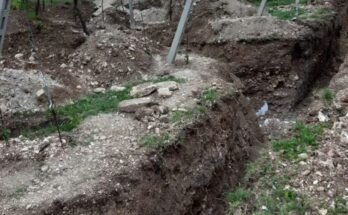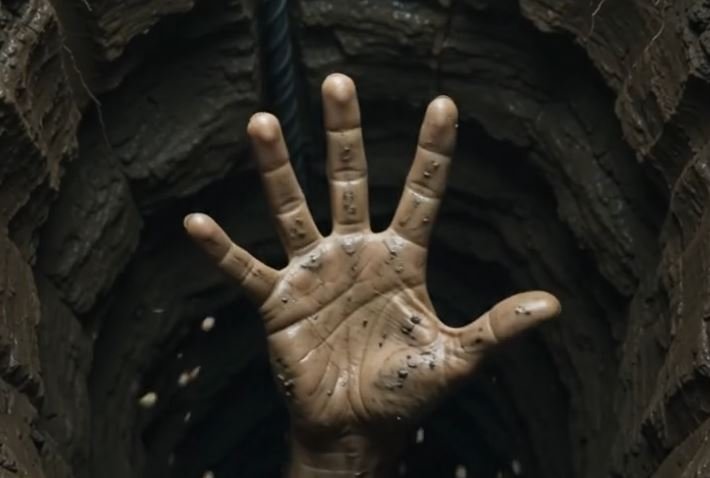
The ancient limestone caves near Deep Creek were thought to be completely stable, but torrential midnight rain forced hundreds of tons of liquid mud into the underground fissures. Liam, a local geologist surveying the subterranean water table, was trapped four hundred feet below the surface when a massive sinkhole sealed the primary access tunnel behind him with packed earth and solid shale.
The collapse severed the main power conduit. Plunged into absolute, suffocating darkness, Liam was trapped in a limestone pocket with rapidly depleting oxygen and a fractured left ankle. His emergency flare was useless against the crushing weight of forty feet of mud blocking the exit. Above ground, heavy rescue equipment couldn’t pinpoint his exact location through the thick limestone shelf, and sonar sweeps were scrambled by subterranean echoes.
Three miles away at the surface station was Atlas—a three-year-old chocolate Labrador Retriever. Atlas wasn’t a certified disaster rescue dog; he was Liam’s personal hunting companion, trained only to locate waterfowl by detecting subtle air scent currents over vast distances.
When the surface ground trembled, Atlas broke free from his leash at the perimeter fence, his nostrils flaring against the wet night air. Driven by the deep bond with his handler, Atlas tracked the faint, warm air escaping from tiny air vents scattered across the forest floor.
For two hours in driving rain, Atlas quartered the forest ground, ignoring sharp thorn bushes and mudslides. He wasn’t looking at the ground—he was holding his head high, sniffing the micro-currents of air rising through the earth.
At 2:15 AM, Atlas stopped near an ancient hollow oak tree miles away from the main cave entrance. A faint trickle of warm carbon dioxide was leaking through a hidden three-inch air fissure beneath the tree roots.
Atlas didn’t bark blindly. He began digging relentlessly at the muddy roots, clearing the damp leaves blocking the micro-vent, and then pressed his muzzle directly over the fissure, letting out long, rhythmic, deep howls that resonated through the hollow tree trunk like a massive wooden amplifier.
Deep underground, shivering in the cold damp blackness, Liam heard a muffled, vibrating sound echoing through the limestone ceiling right above him.
“Atlas…?” Liam whispered, pressing his hands against the cold stone ceiling.
High above, the search team’s acoustic listening devices picked up the deep resonance of the howling tree. Within thirty minutes, heavy drilling rigs arrived at Atlas’s exact location, dropping an emergency air hose and optical camera directly through the fissure Atlas had cleared.
When the rescue team finally brought Liam to the surface six hours later via a vertical rescue shaft, he refused to enter the ambulance until he pulled Atlas onto the stretcher beside him.
Looking at the dog’s mud-stained coat, the rescue chief remarked in awe: “We were drilling half a mile away at the main entrance… if this dog hadn’t found that hidden air vent under the tree, you would have run out of air in two hours.”
Liam held Atlas tightly, whispering: “He didn’t just smell me… he found the breath I was losing.”